Understand the mortgage closing timeline, what can delay your loan, and how clear communication and preparation can help you reach the closing table soon.
Cash Out Refinance vs HELOC: Which Fits?
Your home equity can help fund a major renovation, consolidate high-interest debt, cover a large expense, or support another financial goal. But the way you access that equity matters. In the cash out refinance vs heloc decision, the best choice often comes down to one question: Would you rather replace your current mortgage with a new loan, or keep it and add a flexible credit line?
Both options use your home as collateral. Both can offer lower rates than unsecured borrowing. Yet they work very differently when it comes to interest rates, monthly payments, closing costs, and long-term risk. A careful comparison can help you make a decision that supports your financial plans without creating an uncomfortable payment later.
Cash Out Refinance vs HELOC: The Main Difference
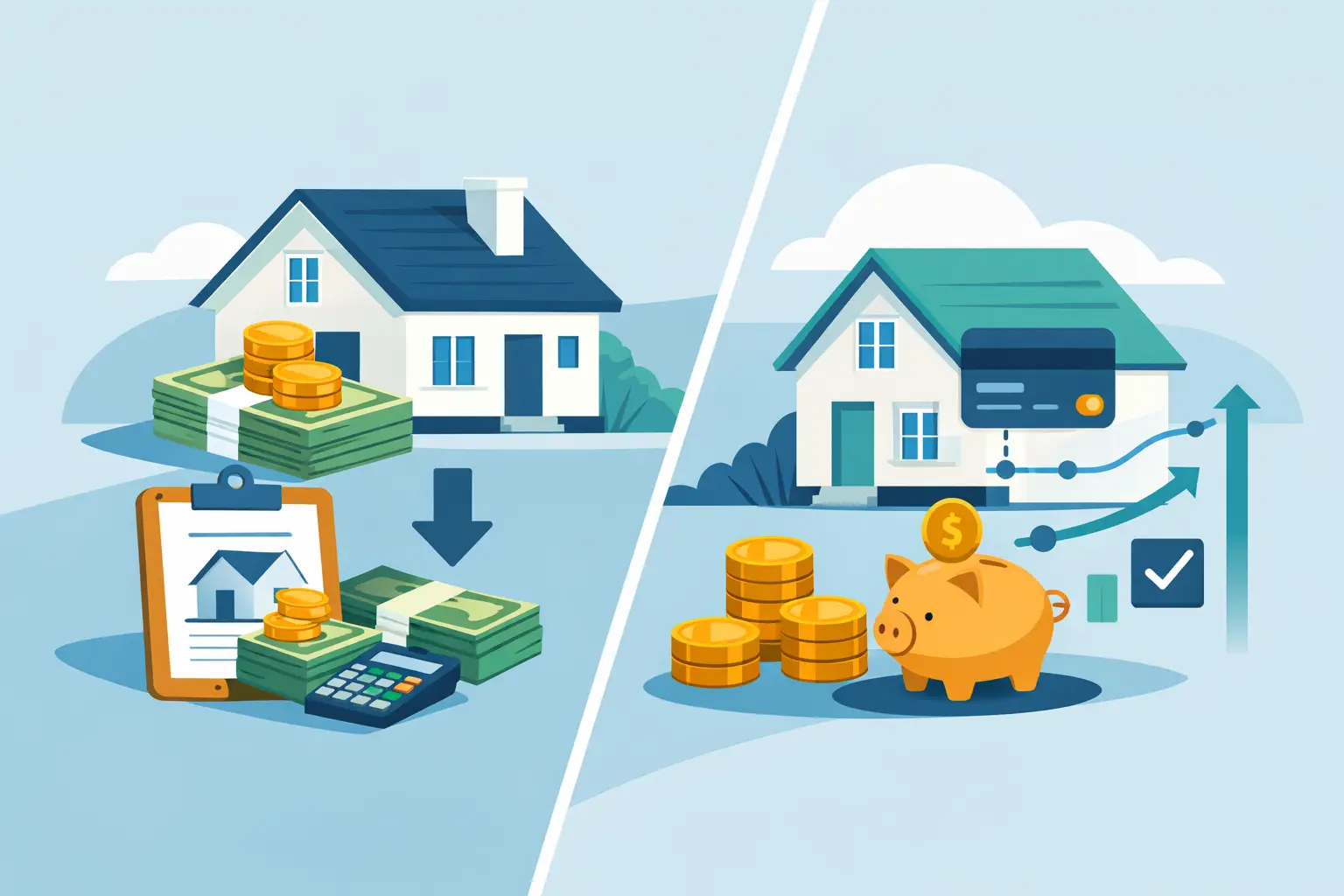
A cash-out refinance replaces your existing mortgage with a new, larger mortgage. The new loan pays off your current balance, and you receive the difference in cash at closing. For example, if you owe $240,000 on a home worth $400,000 and qualify to borrow $300,000, the refinance pays off the $240,000 balance and gives you $60,000 before closing costs and any applicable fees.
A home equity line of credit, or HELOC, is a separate loan that sits alongside your existing first mortgage. Rather than receiving one lump sum, you are approved for a maximum credit limit and can draw money as needed during the draw period. You pay interest only on the amount you have borrowed, not the entire available line.
That distinction shapes nearly every part of the decision. A cash-out refinance changes your primary mortgage. A HELOC preserves it and adds a second monthly obligation.
When a Cash-Out Refinance May Make Sense
A cash-out refinance can be a strong fit when you need a defined amount of money upfront and want the predictability of one mortgage payment. It is commonly used for substantial home improvements, paying off higher-interest consumer debt, or financing a large one-time expense.
Most cash-out refinances are fixed-rate mortgages, although other structures may be available. With a fixed rate, your principal-and-interest payment remains consistent over the loan term. That stability can be valuable for households that prefer a clear monthly budget.
A refinance may also be worth considering if current mortgage rates are meaningfully lower than the rate on your existing loan. In that situation, replacing the first mortgage may improve your rate while allowing you to pull equity out. The calculation is less favorable if your existing mortgage has a very low rate. Trading a 3% first mortgage for a new loan at a much higher rate just to access cash can increase the cost of financing the balance you already owe.
Loan term deserves close attention as well. Refinancing into a new 30-year loan can lower the required payment, but it may extend the time you spend paying interest. A shorter term can reduce total interest, though the payment may be higher. The right structure depends on your income, goals, and comfort with the payment.
Cash-out refinance loans generally involve closing costs, appraisal requirements, underwriting, and a full mortgage approval process. For homeowners who need funds quickly, that timeline may be a consideration. Still, the tradeoff can be worthwhile when you value a fixed payment and need a significant lump sum.
When a HELOC May Be the Better Tool
A HELOC can make sense when your existing first mortgage has an excellent rate that you do not want to replace. Instead of refinancing that loan, you retain it and borrow only the equity you need through a separate credit line.
This flexibility is particularly useful when expenses will arrive in stages. A renovation project is a common example. You may need funds for the initial contractor deposit, then additional draws as work is completed. With a HELOC, you do not begin paying interest on money that remains unused.
HELOCs typically have two phases. During the draw period, often several years, you can borrow, repay, and borrow again up to the approved limit. Some plans allow interest-only payments during this period. Afterward, the repayment period begins. At that point, you can no longer make draws, and the payment may rise because you must repay principal and interest over a shorter remaining term.
The major caution with a HELOC is that its interest rate is usually variable. Your rate and payment can change as market conditions change. A low initial payment can look appealing, but it should not be the only number you evaluate. Ask how your payment could change if rates rise and what payment will look like once repayment begins.
A HELOC may have lower upfront costs than a refinance, but it is not automatically less expensive. Some lenders charge annual fees, early closure fees, or other costs. Review the loan terms carefully, including the rate cap, draw period, repayment period, and any requirements to keep the line open.
Compare the Payment, Not Just the Rate
The lowest advertised rate does not always produce the best outcome. A useful comparison looks at your complete monthly obligation and the amount of interest you may pay over time.
With a cash-out refinance, you have one new mortgage payment that includes the entire refinanced balance. With a HELOC, you continue paying your current mortgage and add a second payment. If the HELOC is interest-only during the draw period, the initial combined payment may appear manageable. But that payment can change, sometimes substantially, when the rate adjusts or principal repayment starts.
Consider a homeowner with a low-rate first mortgage and a need for $40,000 to renovate a kitchen. Keeping the first mortgage and opening a HELOC could be more cost-effective if the project will be completed over several months and only part of the line is drawn at a time. On the other hand, a homeowner who needs $100,000 at once and wants a stable payment for a long-term project may prefer a cash-out refinance, especially if refinancing does not materially worsen the rate on their existing balance.
Your intended use of the funds matters, too. Using home equity to improve the property may support its long-term value, though no improvement guarantees a return. Using it to consolidate credit card debt can simplify payments and reduce interest costs, but only if spending habits and a realistic payoff plan prevent new card balances from building up.
Equity, Qualification, and Risk
Neither option allows you to borrow every dollar of equity in your home. Lenders look at your loan-to-value ratio, credit profile, income, debts, property type, and other underwriting factors. For a HELOC, the lender evaluates the combined loan-to-value ratio, which includes your first mortgage plus the new credit line.
Because your home secures both forms of financing, missed payments carry serious consequences. Before borrowing, leave room in your budget for job changes, repairs, medical costs, and other surprises. It is wise to borrow for a specific purpose and avoid treating home equity as an open-ended source of spending money.
Tax treatment can also vary. Interest on home equity borrowing may be deductible in certain situations when funds are used to buy, build, or substantially improve the home securing the loan. Personal tax circumstances differ, so consult a qualified tax professional rather than assuming a deduction applies.
Questions to Ask Before You Choose
A clear loan comparison starts with your actual numbers, not a generic rate chart. Ask yourself whether you need a lump sum or access to funds over time. Consider whether your current mortgage rate is worth preserving, whether you can handle a variable payment, and how long you expect to remain in the home.
Also ask each lender to show the full scenario. For a cash-out refinance, review the proposed rate, loan term, cash received after costs, and total payment. For a HELOC, review the initial rate, the rate adjustment terms, payment during the draw period, estimated repayment-period payment, and all fees. Comparing these side by side brings the decision into focus.
A mortgage decision should fit your life, not just a spreadsheet. An experienced loan officer can help you evaluate both paths based on your equity, current mortgage, budget, and goals. At Red Tree Mortgage, that conversation begins with clear answers and a lending scenario built around what matters most to your household.

Related Posts