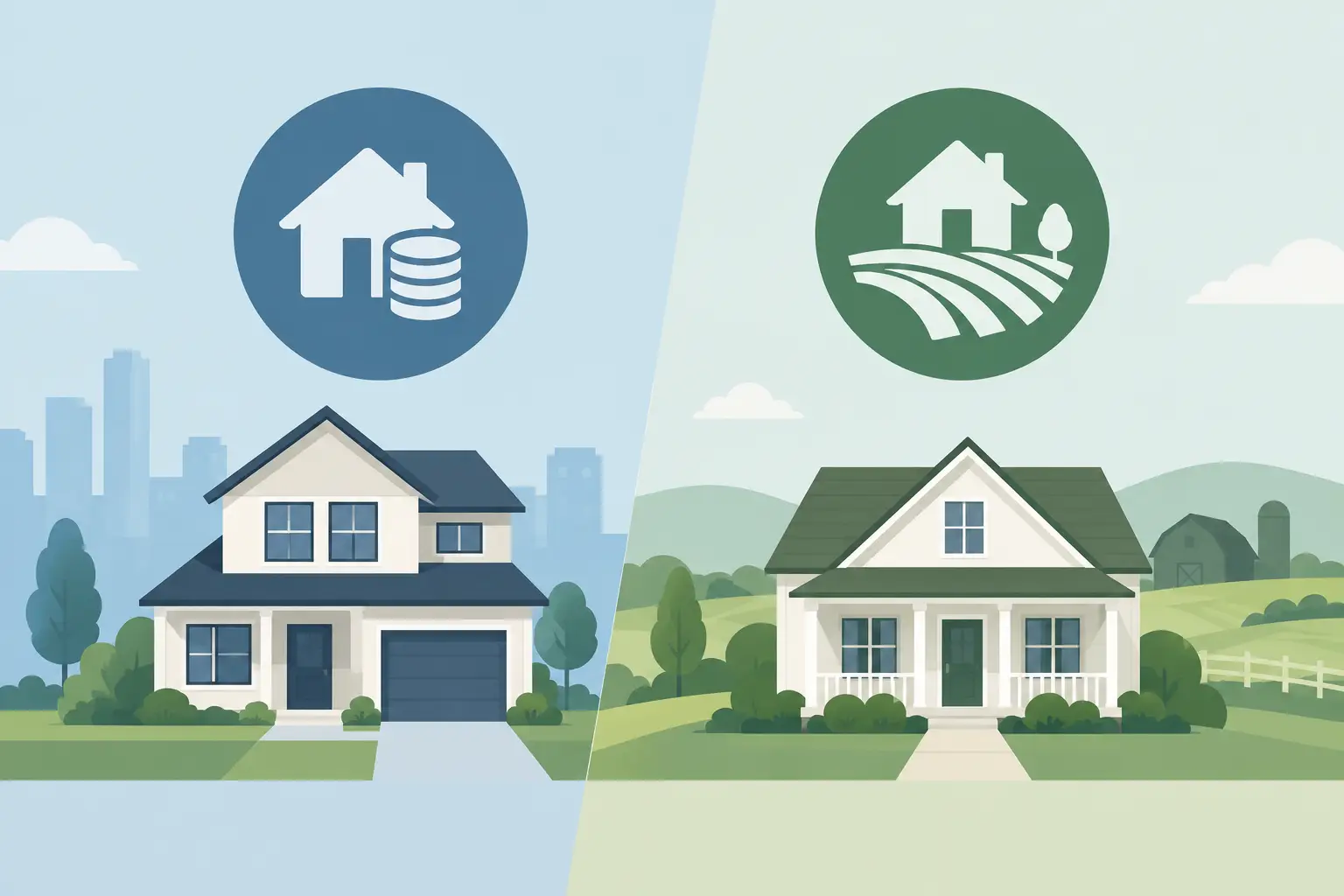
A zero-down mortgage can sound like the obvious choice until you find out the home is not eligible, your household income is over the program limit, or a conventional loan creates a stronger long-term fit. When comparing conventional versus USDA loans, the better option comes down to more than your down payment. Your location, income, credit profile, property plans, and monthly budget all matter.
Both loan types can help qualified buyers become homeowners. The key is choosing financing that supports your life after closing, not just the offer you make today.
Conventional Versus USDA Loans: The Core Difference
A conventional loan is a mortgage that is not backed by a government agency. Many conventional loans follow guidelines established by Fannie Mae and Freddie Mac, although lenders may also offer other conventional options. These loans are widely available and can be used for primary residences, second homes, and investment properties, depending on the program.
A USDA loan is backed by the U.S. Department of Agriculture through its Single Family Housing Guaranteed Loan Program. It is designed to help eligible borrowers purchase modest primary residences in qualifying rural and suburban areas. Despite the name, USDA-eligible locations are not limited to farms or remote communities. Many small towns and areas just outside larger metropolitan regions may qualify.
The most visible distinction is the down payment. USDA loans may offer 100% financing for eligible borrowers, while conventional loans commonly require a down payment. Yet that does not automatically make USDA the less expensive loan. Fees, rates, mortgage insurance, and eligibility rules deserve equal attention.
Down Payment and Upfront Costs
For buyers with limited savings, USDA financing can be compelling because it does not require a down payment. That can preserve cash for moving expenses, repairs, furnishings, and emergency reserves. Closing costs still apply, but depending on the appraisal and program guidelines, eligible closing costs may sometimes be financed into the loan amount or covered through seller concessions.
Conventional loans can require as little as 3% down for qualified primary-residence buyers. A larger down payment may improve pricing, reduce the loan amount, and lower or eliminate private mortgage insurance. Buyers who have funds available may value that flexibility.
There is also a practical difference in how each program handles fees. USDA loans generally include an upfront guarantee fee and an annual fee. The upfront fee can often be financed, which protects cash at closing but increases the total loan balance. The annual fee is paid as part of the monthly mortgage payment. USDA fee amounts are set by the program and can change.
With a conventional loan, borrowers who put down less than 20% typically pay private mortgage insurance, or PMI. PMI costs vary based on credit, down payment, loan type, and other risk factors. It may be paid monthly, upfront, or through a lender-paid structure with a higher interest rate.
Mortgage Insurance Can Change the Long-Term Math
Mortgage insurance is one of the most meaningful differences between these options.
On a conventional loan, PMI can eventually be removed. Borrowers may generally request cancellation once the loan reaches 80% of the original property value, provided they meet lender and investor requirements. In many cases, PMI automatically ends at 78% of the original value if payments are current. That means a conventional loan with PMI may become less expensive over time as equity grows.
USDA’s annual fee generally remains for the life of the loan. That does not mean USDA is always more expensive. A borrower who needs zero down, receives favorable USDA pricing, and plans to keep more cash in reserve may still find it to be the right choice. But a buyer planning to stay in the home for many years should compare projected costs beyond the first monthly payment.
Ask for side-by-side loan scenarios that show the interest rate, estimated payment, cash needed to close, and projected mortgage insurance or annual-fee costs. A low payment today matters, but so does what the loan looks like in five or seven years.
Eligibility: Where USDA Becomes More Specific
Conventional financing has broad property eligibility. A borrower can purchase a home in urban, suburban, or rural areas, subject to the lender’s guidelines and the property’s condition, appraisal, and intended use. Conventional loans also offer more options for condos, second homes, and investment properties.
USDA loans have stricter program requirements. The home must be your primary residence, and it must be located in a USDA-designated eligible area. The property must also meet program standards, including requirements related to value, condition, and use. USDA financing is not intended for income-producing properties or buyers who want a vacation home.
Household income is another important USDA consideration. Eligibility is based on total qualifying household income, not only the income of the person applying for the mortgage. Income limits vary by county and household size. In some cases, a working adult who will live in the home but is not on the loan can affect eligibility.
That is one reason an early conversation with a loan officer is valuable. A home can look eligible online, but the address, household composition, income documentation, and property details all need to be reviewed carefully.
Credit and Debt Requirements
Neither loan type has one universal credit score requirement that applies in every situation. Lenders review credit history, income stability, assets, debt-to-income ratio, and the overall strength of the application.
Conventional loans often provide more flexibility for borrowers with strong credit, particularly those who can make a larger down payment. Better credit may lead to more favorable rates and lower PMI costs. Conventional underwriting can also be a good fit for buyers whose household income exceeds USDA limits or whose preferred home is outside an eligible area.
USDA loans can be a strong option for borrowers with dependable income and acceptable credit who meet the program’s location and income requirements. A history of responsible payment behavior matters. If your credit profile includes recent late payments, collection accounts, or variable income, the right path depends on the full file, not a score alone.
When a Conventional Loan May Be the Better Choice
A conventional loan often makes sense when you want broad property options or have enough savings to make a down payment. It can be especially attractive if you are buying in a city or neighborhood that does not qualify for USDA, purchasing a condo, considering a second home, or planning to buy an investment property.
It may also be the better long-term fit if you have strong credit and expect to build equity quickly. The ability to remove PMI can lower your payment later without requiring a refinance. Buyers with higher household income may also find conventional financing is the more straightforward option because there are no USDA income caps.
Conventional loans are not only for buyers with 20% down. For many first-time buyers, a 3% or 5% down conventional loan offers a practical balance between upfront cash, property flexibility, and future mortgage insurance removal.
When a USDA Loan May Be the Better Choice
USDA financing may be worth serious consideration when you are purchasing an eligible primary residence and want to minimize your down payment. It can be particularly helpful for a buyer who earns a stable income, has manageable monthly debts, and would rather retain savings for homeownership expenses than use it all at closing.
It can also open doors for buyers looking outside major city centers. In communities across Pennsylvania and other eligible areas, the right home may be closer to schools, family, or work than you expect while still meeting USDA location requirements.
The trade-off is that USDA asks more of the property and household. You need to verify the address, document household income, and meet program guidelines. If your situation fits, those extra steps can be worthwhile for the benefit of zero-down financing.
Compare the Whole Loan, Not Just One Feature
The most useful question is not, “Which loan is better?” It is, “Which loan best supports this purchase and my financial plan?” A USDA loan may win on upfront cash, while a conventional loan may offer more property choice and a clearer path to removing mortgage insurance.
Before making an offer, review both options using the same purchase price and realistic closing assumptions. Consider how long you expect to own the home, whether your income may change, and how much savings you want left after closing. Your mortgage should leave room for the ordinary surprises that come with owning a home.
A knowledgeable loan officer can help you evaluate the numbers without pressure and explain the guidelines in plain language. At Red Tree Mortgage, that kind of personal guidance is part of helping borrowers move forward with clarity. The right loan is the one that helps you buy with confidence and keep building a stable home life after the keys are in your hand.