Learn how an investment property mortgage works, what lenders review, and how to prepare for a rental home purchase with early clarity and confidence.
Fixed vs Adjustable Mortgage: Which Fits You?
A mortgage payment can feel very different in year one than it does in year six. That is the central question in a fixed vs adjustable mortgage decision: Do you want the certainty of the same principal-and-interest payment, or are you comfortable trading some predictability for a potentially lower starting rate?
Neither option is automatically better. The right loan depends on how long you expect to own the home, how much payment flexibility your budget has, your refinance plans, and how you would handle a higher payment if rates rise. A clear comparison can help you choose with confidence rather than simply following the lowest advertised rate.
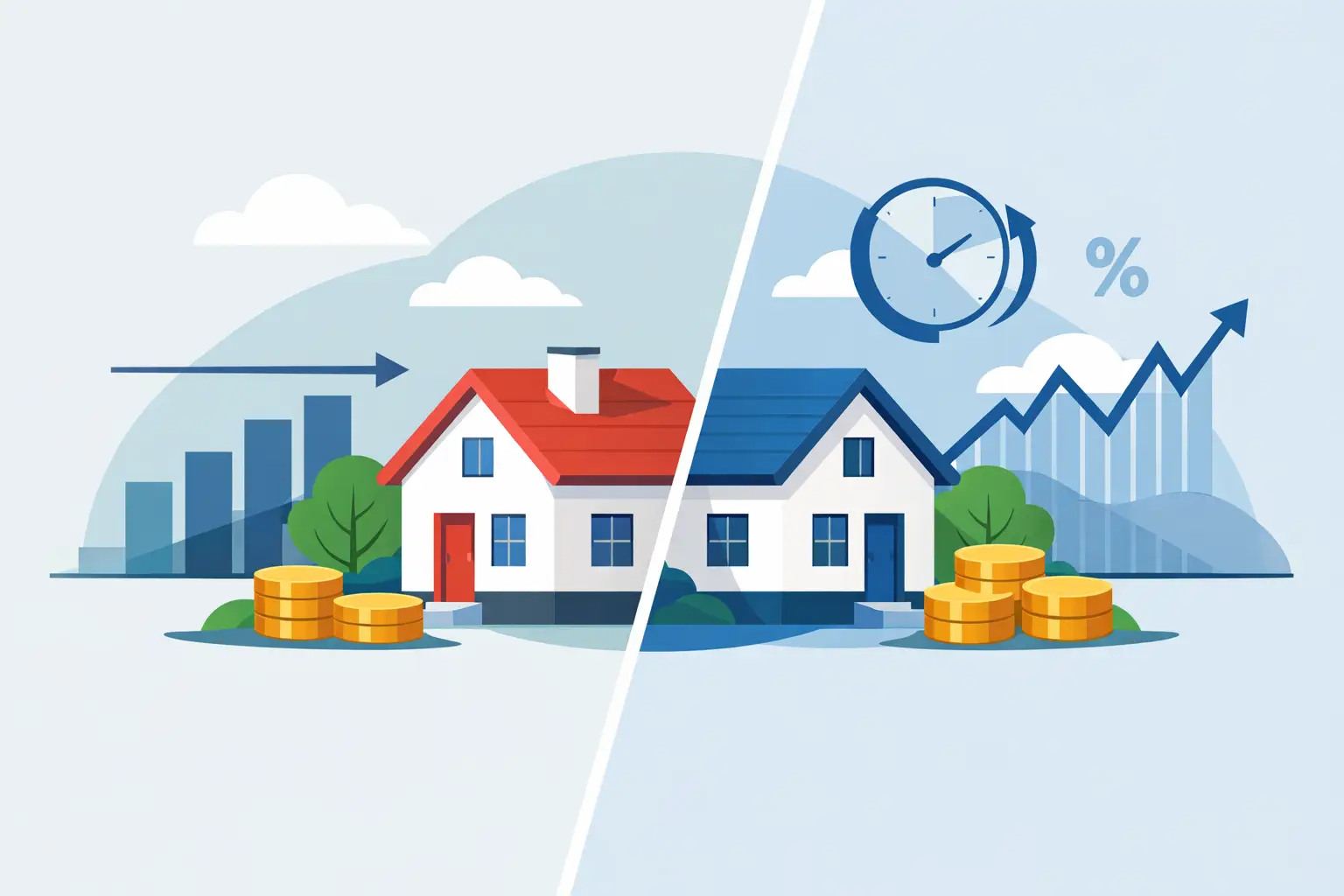
Fixed vs Adjustable Mortgage: The Core Difference
A fixed-rate mortgage has an interest rate that stays the same for the life of the loan. With a 30-year fixed loan, for example, the principal-and-interest portion of your payment remains unchanged for 30 years. Your total monthly payment can still change if property taxes or homeowners insurance change, but the loan’s interest rate and principal-and-interest payment do not.
An adjustable-rate mortgage, often called an ARM, begins with a fixed interest rate for a set introductory period. After that period ends, the rate can adjust at scheduled intervals based on the loan’s index, margin, and adjustment caps. A 5/6 ARM, for example, has a fixed rate for the first five years and can then adjust every six months.
The decision is not simply fixed equals safe and adjustable equals risky. A fixed loan provides more payment certainty. An ARM can be a practical option when its structure matches a borrower’s timeline and risk tolerance. The key is understanding what happens after the introductory period, not just what the payment looks like at closing.
When a Fixed-Rate Mortgage Makes Sense
A fixed-rate mortgage is often the better fit for buyers who plan to stay in their home for many years. If you expect the home to be your long-term base for raising a family, building community, or settling into retirement, a stable payment can make household planning easier.
It can also be a strong choice when your budget has little room for future increases. A fixed rate protects you from higher principal-and-interest payments if market rates rise later. That predictability is valuable for first-time homebuyers who are still getting used to the full cost of homeownership, including maintenance, utilities, taxes, and insurance.
Many borrowers also choose a fixed loan because it is straightforward. You know the rate, the payment schedule, and the long-term plan from the beginning. If rates decline substantially in the future, refinancing may be available, subject to qualification, closing costs, and market conditions. You are not required to refinance, but the option may exist.
The trade-off is that fixed rates can be higher than an ARM’s initial rate. You may pay more each month at the start in exchange for long-term consistency. For some households, that is a worthwhile cost. For others, it may limit how much home they can comfortably afford or reduce cash flow during the years when they need it most.
Fixed loans work especially well for long-term certainty
A fixed-rate mortgage may be worth serious consideration if you plan to keep the loan for a long time, prefer stable monthly budgeting, or would lose sleep over the possibility of an increased payment. It is also often appealing when current market rates are favorable enough that locking them in feels aligned with your financial goals.
When an Adjustable-Rate Mortgage Can Be a Smart Choice
An ARM can make sense for a borrower with a clear, realistic shorter-term plan. Perhaps you expect to relocate for work in a few years, plan to sell after a renovation, or intend to refinance before the fixed period ends. In those situations, a lower introductory rate may reduce monthly payments during the time you expect to hold the loan.
For example, a buyer choosing a 7/6 ARM may receive a fixed rate for seven years. If they are confident they will sell within five years, the possibility of a later adjustment may be less relevant to their actual plan. Still, plans can change. A job transfer may fall through, a family member may need to move in, or selling conditions may not be ideal when expected. An ARM should be selected with a backup plan, not just an optimistic timeline.
Some borrowers also use ARMs strategically when they have strong income growth potential or substantial savings. Even then, the future payment needs to be manageable. A lender can help you review the highest possible payment under the loan’s caps, not only the initial payment shown on a quote.
Understanding ARM terms before you commit
Every ARM has details that deserve close attention. The introductory rate is only one part of the picture. Ask how long the initial fixed period lasts, how frequently the rate may adjust afterward, which index is used, and what margin is added to that index.
Most importantly, review the caps. An ARM commonly includes an initial adjustment cap, a periodic adjustment cap, and a lifetime cap. These limits control how much the rate can rise at the first adjustment, at later adjustments, and over the life of the loan. Caps provide important guardrails, but they do not eliminate the possibility of a meaningful payment increase.
A good loan conversation should include side-by-side scenarios: the starting payment, an estimated payment after an adjustment, and the maximum potential payment based on the loan terms. That is how you evaluate an ARM honestly.
Compare More Than the Interest Rate
The lowest initial rate does not always produce the best mortgage outcome. When comparing a fixed-rate loan and an ARM, look at the full financial picture: monthly principal and interest, closing costs, lender fees, mortgage insurance if applicable, and how long you expect to keep the loan.
You should also consider the break-even point. If an ARM saves you money each month at the beginning but carries higher costs to obtain, how long does it take for those monthly savings to offset the added upfront expense? If you plan to move before that point, the initial rate advantage may not matter as much as it appears.
Your down payment and loan type can matter, too. Conventional, FHA, VA, jumbo, and refinance programs may have different pricing and qualification considerations. The right rate structure should support the loan program and homeownership plan that fit your circumstances, rather than forcing your goals into one product.
Questions to Ask Before Choosing Your Rate Structure
Before moving forward, be honest about your timeline. Are you reasonably likely to stay in the home beyond the ARM’s fixed period? Could you afford the payment if the rate adjusted upward? Would you still be comfortable if refinancing were not available when you hoped to use it?
It is also helpful to ask whether you value lower payments now or greater certainty later. There is no wrong answer. A young professional expecting to relocate in three years may reach a different conclusion than a family buying a home they intend to keep for decades.
Finally, avoid making the decision based on predictions about future rates. No one can guarantee where rates will be in two, five, or seven years. Build your decision around what you can afford now and under the loan’s documented adjustment terms.
Get a Mortgage Recommendation Built Around Your Plans
The best mortgage is not the one with the most attractive headline rate. It is the one that supports your budget, your likely time in the home, and your ability to handle change. A fixed loan can offer lasting peace of mind, while an ARM can create useful short-term savings for the right borrower.
At Red Tree Mortgage, a loan officer can walk through both options using real payment scenarios and clear terms, so you can make a decision rooted in your goals. Before you choose, ask to see the numbers at the start, after possible adjustments, and at the payment level your household can truly sustain. That conversation can turn a complex choice into a plan you can feel good about.

Related Posts