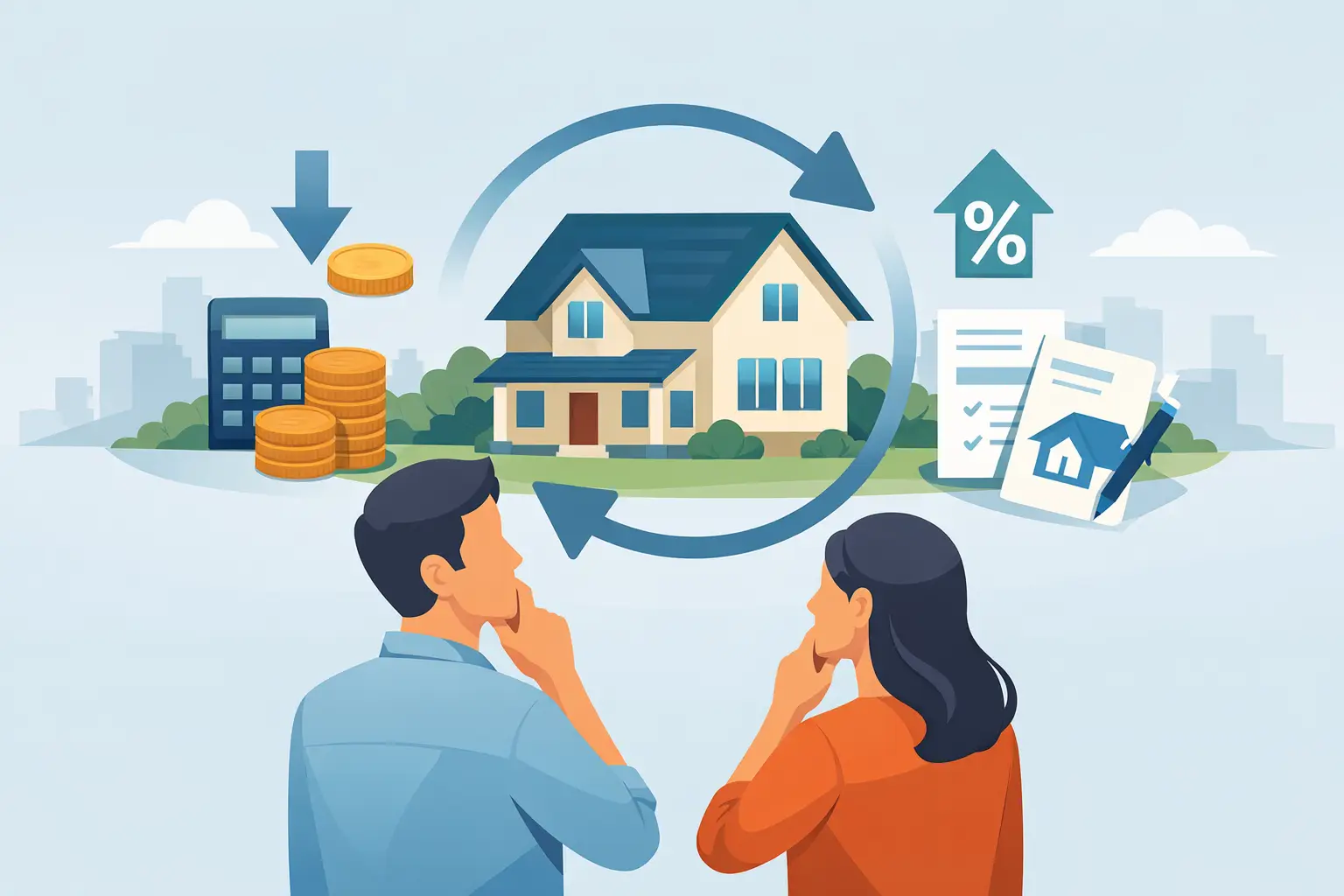
Wondering when should you refinance? Learn how rates, equity, loan costs, and your plans for the home can help you make a confident decision today now.
15 Year Versus 30 Year Mortgage Choices
A mortgage term changes far more than the date of your final payment. The 15 year versus 30 year decision affects your monthly budget, total interest, home equity, and the financial flexibility you keep when life takes an unexpected turn. Neither option is automatically better. The right choice is the one that supports your goals without putting unnecessary strain on your household finances.
For many buyers, the 30-year fixed mortgage offers a more comfortable payment. For others, a 15-year fixed mortgage is a disciplined path to owning the home sooner and paying substantially less interest. Understanding the trade-offs before you choose can make the decision feel much clearer.
15-Year Versus 30-Year Mortgage at a Glance
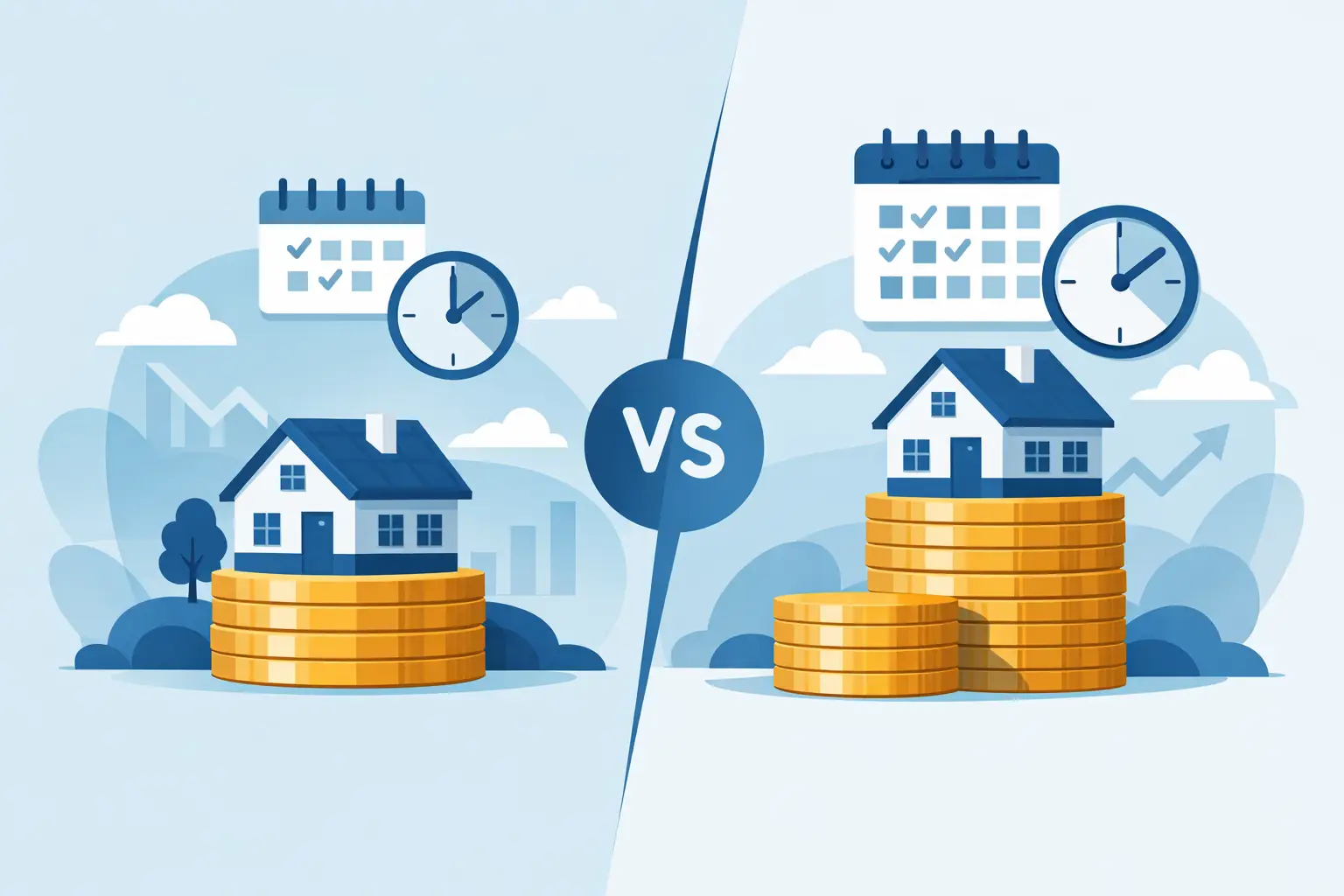
Both loans can provide a fixed interest rate and predictable principal-and-interest payment for the life of the loan. The major difference is the repayment timeline. With a 15-year mortgage, you repay the balance in 180 monthly payments. With a 30-year mortgage, you spread that same balance across 360 payments.
Because the 15-year loan is paid off sooner, its monthly payment is higher. It also commonly carries a lower interest rate than a 30-year fixed loan, although rates, fees, and loan terms depend on market conditions and your individual qualifications.
A 30-year mortgage lowers the required monthly payment by extending repayment. That extra time means more interest can accrue, especially in the early years when a larger share of each payment goes toward interest rather than principal.
How the Monthly Payment Changes
The payment difference can be meaningful. Consider a simplified example: a $300,000 loan balance with principal and interest only. At 6.25% on a 30-year fixed mortgage, the estimated monthly principal-and-interest payment is about $1,847. At 5.75% on a 15-year fixed mortgage, it is about $2,491.
The 15-year payment is roughly $644 higher each month in this example, even with the lower rate. Property taxes, homeowners insurance, mortgage insurance, and homeowners association dues are not included, so the complete monthly housing cost would be higher.
That higher payment deserves careful attention. A lender may approve a borrower for it, but approval is not the same as comfort. Your mortgage payment should leave room for routine expenses, home maintenance, savings, retirement contributions, and the surprises that are part of owning a home.
A lower payment is not wasted money
Choosing a 30-year loan does not mean you are making a poor financial choice. It may allow you to keep an emergency fund intact, handle childcare costs, invest for retirement, prepare for a career change, or purchase a home in a location that better serves your family.
The lower required payment also gives you options. If your income rises or you receive a bonus, you can often make extra principal payments to pay the loan down faster. Before doing so, confirm that your loan has no prepayment penalty and make sure the additional funds are applied to principal.
Total Interest Is Where the 15-Year Loan Shines
Using the same illustration, the estimated total principal and interest paid over 30 years would be about $665,000. Over 15 years, it would be about $448,000. The shorter term could save well over $200,000 in interest, largely because you borrow the money for half as long.
This is the central appeal of a 15-year mortgage: more of your payment goes toward reducing the balance, and you reach a debt-free home much earlier. For borrowers with stable income, low consumer debt, and strong reserves, that result can be very compelling.
Still, total interest is not the only number that matters. A lower interest cost is valuable, but not if the higher required payment forces you to use credit cards for emergencies, skip needed repairs, or pause all retirement saving. The most efficient mortgage on paper is not always the healthiest choice for your financial life.
Building Equity Faster With a 15-Year Term
Every mortgage payment includes principal and interest. At the beginning of a 30-year loan, interest takes a larger share of the payment because the balance is still high. A 15-year loan reduces principal more quickly, helping you build equity at a faster pace.
Fast equity growth can help if you plan to sell in several years, want to refinance later, or simply value the security of owning more of your home. It may also reduce the time you pay private mortgage insurance on a conventional loan if mortgage insurance is required.
But equity is not the same as cash in the bank. Home equity is tied to your property unless you sell, refinance, or borrow against it. A buyer who puts every available dollar toward a larger monthly mortgage payment may have plenty of equity but limited cash reserves. Keeping some liquidity is often a wise part of a homeownership plan.
When a 30-Year Mortgage May Be the Better Fit
A 30-year fixed mortgage can be a strong choice when flexibility matters most. It may fit a first-time buyer who is adjusting to the full cost of homeownership, a growing family managing changing expenses, or a buyer purchasing in a higher-cost area.
It can also make sense if you expect income to vary. Commission-based workers, self-employed borrowers, and households with seasonal earnings may appreciate having a lower required payment during slower months. They can still make additional principal payments in stronger months if that aligns with their goals.
A 30-year term may also be useful if the lower payment helps you avoid stretching your debt-to-income ratio. Buying at the top of your comfort range can make a house feel like a burden. Leaving margin in the budget gives you more freedom to enjoy the home and respond to changes without panic.
Paying a 30-year mortgage like a shorter loan
Some homeowners choose a 30-year term and voluntarily pay extra each month. This approach can offer flexibility: the contractual payment remains lower, while extra principal payments accelerate payoff when cash flow allows.
There is a trade-off. A 15-year loan may have a lower interest rate, and voluntary extra payments require consistency. If your goal is a guaranteed 15-year payoff and the payment fits your budget easily, a true 15-year mortgage may be more efficient. If flexibility is the priority, the 30-year term with thoughtful extra payments may be more comfortable.
When a 15-Year Mortgage Makes Sense
A 15-year fixed mortgage is often worth considering when you have reliable income, a solid emergency fund, manageable monthly obligations, and a clear desire to reduce long-term interest costs. It can be especially attractive for homeowners refinancing a smaller remaining balance or buyers who are making a sizable down payment.
It may also fit borrowers who are nearing retirement and want to eliminate a housing payment before they stop working. The timing matters, though. Directing more money to the mortgage should not come at the expense of retirement savings, health care planning, or other priorities that become more significant later in life.
The key question is not simply, “Can I qualify for the 15-year payment?” A better question is, “Can I make this payment comfortably while continuing to save, maintain the home, and handle an emergency?”
Compare the Whole Loan Scenario, Not Just the Rate
Interest rate is important, but it should not decide the term by itself. When comparing a 15-year and 30-year mortgage, look at the complete picture: the monthly principal-and-interest payment, estimated cash to close, annual percentage rate, total interest over time, projected balance after several years, and how each option affects your monthly budget.
Also consider how long you expect to keep the loan. A buyer planning to move in five years may evaluate the decision differently than someone purchasing a long-term home. A homeowner refinancing should compare the new loan term against the years remaining on the current mortgage rather than assuming a shorter term is always the best outcome.
Your loan officer can prepare side-by-side scenarios based on your actual purchase price or refinance balance, credit profile, down payment, and financial goals. At Red Tree Mortgage, that conversation is designed to give you clarity, not pressure. A mortgage should support the life you are building, and the best term is the one that lets you move forward with confidence.

Related Posts