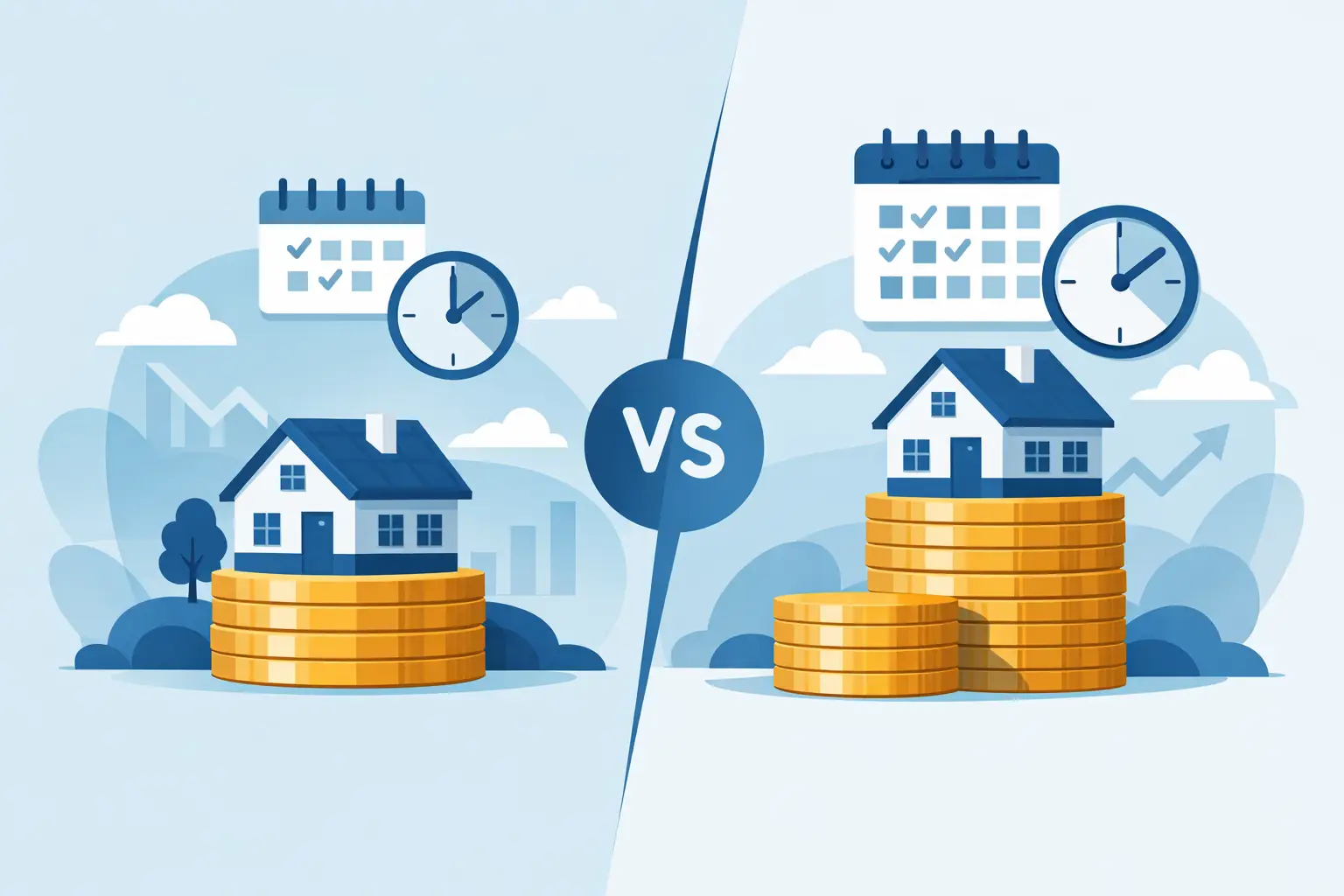
Compare a 15 year versus 30 year mortgage: payments, interest, equity and flexibility explained to help you choose a loan confidently before you buy.

First Time Homebuyer Loan Guide for 2026
The house payment is only one number. Before you make an offer, you also need to understand the cash required at closing, the loan program behind the payment, and how a lender will review your income and credit. This first time homebuyer loan guide helps you turn those moving pieces into a clear plan – so you can shop with confidence rather than guesswork.
Start With Your Real Buying Budget
A preapproval amount is helpful, but it should not become your spending target. The better question is: What monthly payment leaves room for the life you want to live? Consider principal and interest, property taxes, homeowners insurance, mortgage insurance when applicable, and any homeowners association dues. Home maintenance, utilities, commuting, and future goals matter too.
Start by reviewing your income, recurring monthly debts, savings, and credit profile. Lenders use debt-to-income ratio to compare your monthly debt obligations with your qualifying income. A strong income does not automatically mean a comfortable payment, especially if you have student loans, auto payments, or plans to grow your family.
It is also wise to protect some savings after closing. A home can need a repair shortly after you get the keys. Using every available dollar for the down payment may lower the loan balance, but it can leave you with little flexibility. The right down payment is not always the largest one you can make.
First Time Homebuyer Loan Guide: Know Your Options
First-time buyers do not all need the same mortgage. The best fit depends on your credit, down payment funds, property type, military eligibility, location, and long-term plans for the home. A loan officer can compare actual loan scenarios, because rates, fees, and qualification requirements can change.
Conventional loans
A conventional loan is not backed by a federal government agency. Many buyers choose conventional financing because it can work well with solid credit and a down payment as low as 3% for qualified borrowers. If you put down less than 20%, private mortgage insurance, or PMI, is commonly required. Unlike some government-loan mortgage insurance, PMI may be removable later once you meet the loan’s requirements.
Conventional loans can be a strong choice for buyers with stable income, good credit, and a property that meets standard appraisal and condition expectations. Still, a lower down payment can mean a higher monthly payment, so compare it with other programs rather than assuming it is automatically the lowest-cost option.
FHA loans
FHA loans are insured by the Federal Housing Administration and are designed to make homeownership more accessible for buyers who may have limited down payment savings or less-than-perfect credit. Eligible borrowers may qualify with a down payment as low as 3.5%.
The trade-off is mortgage insurance. FHA financing generally includes both an upfront mortgage insurance premium and an annual premium paid through the monthly payment. FHA property standards can also be more specific, which may affect the appraisal process if a home has visible condition issues. For some buyers, those trade-offs are worthwhile because the program creates a realistic path to purchase sooner.
VA loans
Eligible veterans, active-duty service members, and certain surviving spouses may benefit from a VA loan. VA financing can offer no-down-payment options, competitive terms, and no monthly mortgage insurance requirement. A VA funding fee may apply, though some borrowers are exempt.
Eligibility and available entitlement are personal to the borrower, so do not rely on general assumptions. If you have served, ask for a VA loan review before choosing another program. It may offer a meaningful advantage.
USDA loans
USDA loans may provide zero-down financing for eligible borrowers purchasing in designated rural and suburban areas. Income limits and property location rules apply, so this option is not available for every household or every address. For buyers looking outside major city centers, it is worth checking rather than ruling out based on the word “rural.”
Understand the Cash You Need to Close
Your down payment is not the same as your closing costs. Closing costs can include lender charges, appraisal and credit report fees, title services, government recording fees, prepaid property taxes, and homeowners insurance. The exact amount depends on the loan, property, location, and closing date.
Some costs may be paid by the seller when permitted and negotiated in the purchase contract. A lender credit can also be an option in certain situations, though it may be tied to a higher interest rate. Down payment assistance programs can help eligible buyers, but these programs have different income limits, property rules, repayment terms, and availability. Assistance is valuable when it fits, not when it creates a payment or obligation you did not fully understand.
Before you offer on a home, ask for a detailed estimate of your expected funds to close. That conversation helps you decide how much earnest money, inspection costs, reserves, and moving expenses you can comfortably handle.
Build a Credit and Documentation Plan
You do not need perfect credit to buy a home, but your credit profile affects both qualification and pricing. Pay every account on time, avoid adding new debt before closing, and do not make large unexplained deposits into your bank account. A new credit card, auto loan, or furniture financing can change your debt-to-income ratio and your approval terms.
Gather documents early. Most buyers should expect to provide recent pay stubs, W-2s or tax returns, bank statements, photo identification, and information about debts or assets. Self-employed buyers may need additional business documentation. Being organized helps your lender verify information promptly and keeps small questions from becoming closing-day stress.
Do not move money between accounts without a paper trail. If family members plan to help with your down payment, tell your loan officer early. Gift funds are often allowed, but they need to be documented correctly.
What Happens Between Preapproval and Closing
Preapproval begins with a lender reviewing your financial information and credit to estimate what you may qualify to borrow. It is more meaningful than a casual online estimate, but it is not a final loan commitment. The property, appraisal, title work, employment verification, and updated financial review still matter.
Once you have a signed purchase agreement, your lender orders the appraisal and submits the file for underwriting. Underwriting verifies that the loan meets program guidelines and that the home supports the value needed for financing. You may be asked for additional documents. Responding quickly is one of the most practical ways to protect your timeline.
Avoid major financial changes until your loan closes. Keep paying bills on time, maintain your employment when possible, and check with your loan officer before changing accounts, making a large purchase, or co-signing for someone else. The goal is not to put life on hold forever. It is to avoid surprises during a short, important window.
Choose Guidance, Not Just a Rate Quote
A low advertised rate can be appealing, but a mortgage decision is more than one number. Compare the loan type, interest rate, annual percentage rate, estimated cash to close, monthly payment, mortgage insurance, lender fees, and how long you expect to keep the loan. A slightly different rate may make sense if it meaningfully reduces upfront costs, and it may not if you plan to stay in the home for many years.
You also deserve a lender who explains the “why” behind the recommendation. At Red Tree Mortgage, that means taking time to review your options, answer direct questions, and help you understand the next step before you take it.
Your first home does not need to be a perfect house or a perfect financial moment. It needs to be a purchase that fits your budget, your plans, and your comfort level. Start the conversation early, ask for clear numbers, and give yourself the benefit of informed guidance before you fall in love with a property.

Related Posts