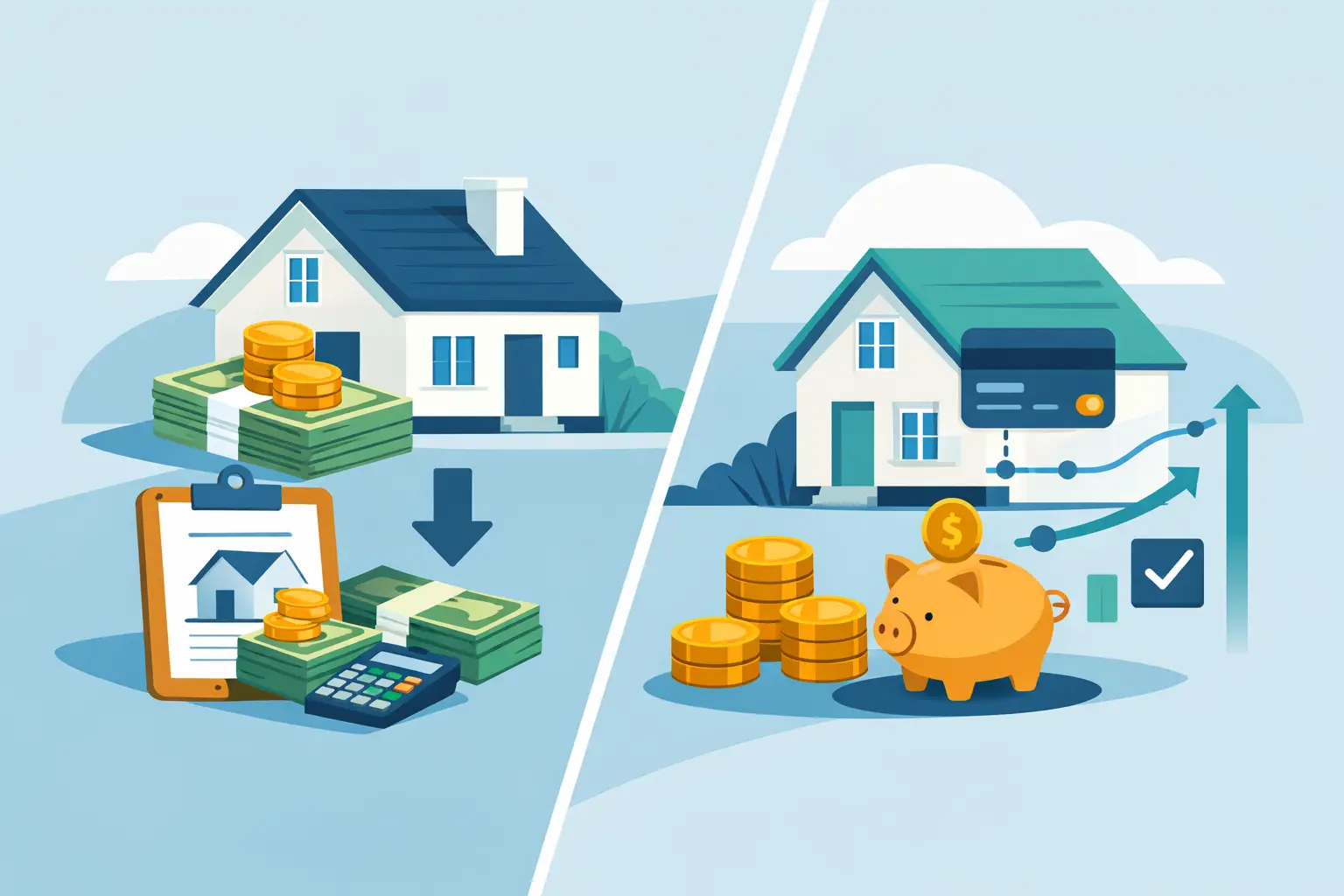
Our mortgage underwriting process guide explains what lenders review, which documents matter, what may delay approval, and how to prepare for a smoother closing.

How Does Home Financing Work?
A home can feel affordable when you look at the listing price alone, then suddenly much more complicated when terms like preapproval, escrow, PMI, and debt-to-income ratio start showing up. If you have been wondering how does home financing work, the short answer is this: a lender helps you buy a home now by lending money you repay over time, with interest, under terms based on your income, credit, assets, and the property itself.
That is the simple version. The real process has a few moving parts, and understanding them early can help you make better choices, avoid surprises, and move forward with more confidence.
How does home financing work from start to finish?
Home financing is the process of using a mortgage loan to purchase a property. You typically contribute some of your own money up front as a down payment, and the lender funds the rest. In exchange, you agree to repay the loan over a set number of years, most often 15 or 30, with interest.
The home itself serves as collateral for the loan. That means if a borrower stops making payments and no resolution is reached, the lender has legal remedies tied to the property. That may sound intimidating, but it is also why mortgage rates are usually lower than rates on unsecured debt like credit cards or personal loans.
Most borrowers move through the same general stages: reviewing finances, getting preapproved, shopping for a home, applying formally after a contract is signed, going through underwriting, and closing on the loan. Each stage is meant to answer one question: can this borrower reasonably afford this property under the loan terms requested?
The main pieces of a mortgage payment
When people think about a mortgage, they often focus only on principal and interest. Those are important, but your full monthly housing payment can include more.
Principal is the amount you borrowed. Interest is what the lender charges for lending that money. On top of that, many borrowers also pay property taxes and homeowners insurance through their monthly payment. If your down payment is below a certain threshold on a conventional loan, or if your loan program requires it, mortgage insurance may be included too. If the property is in a homeowners association, HOA dues are usually paid separately and still count toward affordability.
This is why two homes with the same price can produce very different monthly payments. Taxes vary by location, insurance varies by property and coverage, and mortgage insurance depends on the loan structure.
What lenders look at when approving home financing
Lenders do not make decisions based on one number alone. Approval is usually based on the full picture.
Income matters because the lender needs to see that you have the ability to repay the loan. Credit matters because it helps show how you have handled debt in the past. Assets matter because they can support your down payment, closing costs, and cash reserves. Debt matters because existing obligations affect how much room you have for a new housing payment.
One key measure is your debt-to-income ratio, often called DTI. This compares your monthly debt obligations to your gross monthly income. A lower DTI generally gives you more flexibility, but acceptable limits depend on the loan type and the strength of the rest of your file.
Credit score also plays a major role in pricing. A stronger score can improve your loan options and may help you secure a lower interest rate. But lower scores do not always prevent homeownership. FHA loans, VA loans, USDA loans, and other specialized programs can create paths for borrowers whose profiles do not fit a narrow conventional standard.
Preapproval is where the process gets real
Many buyers start by browsing homes online, but preapproval is what turns casual searching into a real plan. During preapproval, a lender reviews your financial information and gives you an estimate of what you may qualify for.
This step matters for two reasons. First, it helps you understand your realistic price range before you fall in love with a home that stretches your budget too far. Second, sellers often take preapproved buyers more seriously because it shows a lender has already reviewed the basics.
A strong preapproval is not just about the maximum amount you can borrow. It should also help you think through what monthly payment feels comfortable for your life. That is an important distinction. Just because you qualify for a certain number does not mean you should spend to that limit.
Common loan options and how they differ
There is no single mortgage that fits every borrower. The right option depends on your goals, financial profile, property type, and timeline.
Conventional loans are among the most common and can work well for borrowers with solid credit and stable income. They offer flexible term options and may allow low down payments, though private mortgage insurance can apply if you put down less than 20%.
FHA loans are backed by the Federal Housing Administration and are often attractive to first-time buyers or borrowers who need more flexible credit and down payment guidelines. The trade-off is that mortgage insurance rules may be less forgiving over time than with some conventional structures.
VA loans are available to eligible veterans, active-duty service members, and some surviving spouses. They can be one of the most valuable financing options available because they may allow zero down payment and no monthly mortgage insurance. USDA loans are designed for eligible rural and certain suburban areas and can also offer no-down-payment financing for qualified borrowers.
Jumbo loans are used when the loan amount exceeds conforming loan limits. These can be useful in higher-priced markets, but they often come with stricter qualifying standards. Rehab loans, investment property financing, and refinance programs each have their own rules as well.
This is one reason experienced guidance matters. The best loan is not always the one with the headline rate. It is the one that fits your full situation.
Down payment, closing costs, and cash to close
One of the biggest misconceptions about home financing is that you always need 20% down. In reality, many borrowers qualify with much less. Some programs allow down payments as low as 3% or even 0% for eligible borrowers.
That said, your down payment affects more than just how much cash you need upfront. It can also influence your loan amount, monthly payment, interest rate, and whether mortgage insurance is required. A larger down payment can improve affordability, but it is not always wise to drain all your savings just to put more down. Keeping reserves for repairs, moving expenses, and emergencies matters too.
You also need to account for closing costs. These may include lender fees, title charges, government recording fees, prepaid taxes, prepaid insurance, and other transaction-related costs. Together, your down payment and closing costs make up your cash to close.
Sometimes sellers, builders, or lenders can help offset a portion of closing costs, depending on the loan program and transaction terms. That is another area where planning early can make a real difference.
Interest rates, loan terms, and why timing matters
Your interest rate affects the cost of borrowing, but rate alone does not tell the whole story. The loan term, points, credits, and total fee structure all shape the overall cost.
A 30-year fixed-rate mortgage offers predictable payments over a longer term, which often keeps monthly payments lower. A 15-year fixed-rate mortgage usually has a lower rate and builds equity faster, but the monthly payment is higher. Adjustable-rate mortgages may start with a lower initial rate, then change later based on market conditions. For some borrowers, that structure makes sense. For others, the future payment uncertainty is not worth the risk.
Rates also change daily based on the broader market. That means the quote you receive one week may not be the same the next. Once you are under contract, your lender can talk with you about whether and when to lock your rate.
Underwriting, appraisal, and closing
After you have a signed purchase agreement and complete your loan application, the file moves deeper into processing and underwriting. This is where documentation is reviewed in detail. The lender verifies income, assets, employment, credit, and property information.
An appraisal is usually ordered to confirm that the home’s value supports the loan amount. If the appraised value comes in lower than the purchase price, you may need to renegotiate, increase your down payment, or reconsider the deal. This is one of those moments where home financing becomes very practical very quickly.
Underwriters may issue conditions, which are requests for additional items or clarifications. That is normal. Once conditions are satisfied and the file receives final approval, closing is scheduled. At closing, you sign the loan documents, pay your required funds, and the transaction is completed.
Why the right lender matters
Home financing is part math and part guidance. Numbers matter, but so does having someone explain your options clearly, respond when questions come up, and help you think through trade-offs instead of pushing a one-size-fits-all answer.
For a first-time buyer, that may mean understanding low down payment options without taking on a payment that feels too tight. For a veteran, it may mean making full use of VA benefits. For a homeowner refinancing, it may mean weighing a lower rate against closing costs and the time needed to break even. For an investor, it may mean structuring financing around cash flow and long-term goals.
That relationship-focused approach is where a lender like Red Tree Mortgage can make the process feel more manageable. Clear communication and experienced advice do not remove every decision, but they do help you make those decisions with confidence.
Home financing works best when it is built around your life, not just the property price on paper. Ask questions early, look beyond the advertised rate, and give yourself room to choose a payment that supports the future you want to build.

Related Posts