Can sellers pay closing costs? Learn how seller concessions work, loan limits, and negotiation strategies that can make your home purchase easier today.
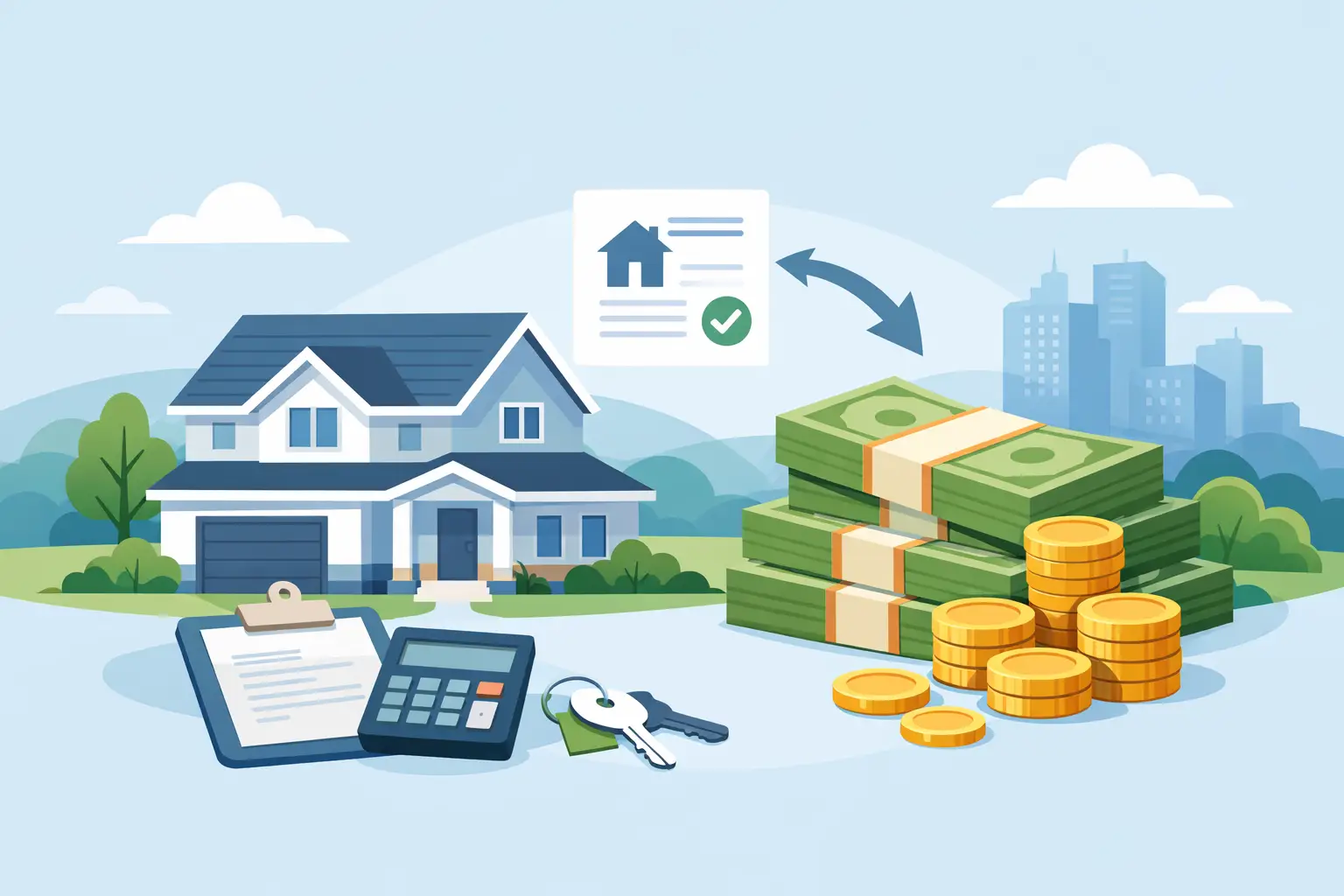
Cash Out Refinance Guide for Homeowners
A lot of homeowners first look into tapping equity when a major bill is already on the table – a kitchen renovation estimate, high-interest credit card balances, tuition, or a rental property opportunity that needs fast funding. A cash out refinance guide should help you slow that moment down just enough to make a good decision, because using your home equity can be helpful, but it is never casual.
A cash-out refinance replaces your current mortgage with a new, larger one. The difference between your old loan balance and the new loan amount comes back to you as cash at closing. That sounds simple, but the real question is whether the new loan improves your overall financial position or just gives you access to money today at a cost you will feel for years.
What a cash out refinance guide should help you answer
The first question is not how much cash you can get. It is what that cash is for.
Using home equity to pay off debt with very high rates can make sense if the refinance meaningfully lowers your monthly outflow and you are committed to not rebuilding that debt. Using equity for home improvements can also be reasonable, especially if the work improves livability, safety, or long-term value. Some borrowers use cash out for business needs, education, or investment opportunities. Those cases are more personal and often riskier, because you are turning unsecured or flexible expenses into debt tied to your home.
That is the core trade-off. A cash-out refinance can improve cash flow, consolidate debt, or create funding for a worthwhile goal. It can also stretch repayment over a much longer term, increase total interest paid, and reduce the equity cushion you have built.
How cash-out refinancing works
When you refinance, your existing mortgage is paid off and replaced with a new one. In a cash-out transaction, the new loan is larger than the payoff amount and allowable closing costs. After everything is settled, you receive the remaining funds.
Lenders look at several things to determine eligibility and pricing. Your credit profile matters. Your income and debt obligations matter. Your home value matters. Equity matters a great deal, because most programs require you to keep a certain percentage of equity in the property after closing.
For example, if your home is worth $400,000 and program guidelines allow borrowing up to 80 percent of value, the maximum total mortgage might be $320,000. If your current loan balance is $240,000, that could leave up to $80,000 available before factoring in closing costs and any other loan-specific limits.
The exact number depends on loan type, occupancy, credit, property type, and current mortgage guidelines. A primary residence often has more flexibility than a second home or investment property.
Cash-out refinance vs. home equity loan
Homeowners sometimes compare a cash-out refinance with a home equity loan or home equity line of credit. The right fit depends on your current first mortgage rate and how much flexibility you need.
A cash-out refinance creates one new mortgage. That can be appealing if simplifying payments matters or if current rates and terms still work in your favor. A home equity loan or line leaves your first mortgage in place and adds a second loan. That may be more attractive if your current first mortgage rate is very low and you do not want to replace it.
There is no universal winner here. If you have an excellent rate on your current mortgage, replacing the whole balance just to access cash may be expensive. If your current rate is already high or other terms are less favorable, refinancing the full loan could be a cleaner solution.
When a cash-out refinance makes sense
The strongest use cases usually have a clear financial purpose and a realistic repayment plan. Paying off high-interest debt is one example, but only if the new monthly payment helps and the underlying spending problem is addressed. Otherwise, you may trade credit card debt for mortgage debt and end up in a worse position.
Home improvements are another common reason. If the project is necessary, adds function, or helps maintain the property, using equity may be reasonable. Borrowers in markets with older housing stock, including parts of Pennsylvania and Ohio, often look at cash out for roof replacement, HVAC updates, or kitchen and bath renovations that support both comfort and resale value.
Some homeowners use cash out to create breathing room during a period of transition, such as paying off a vehicle loan, funding tuition, or covering a major life event. That can work, but only if the refinance does not create a payment that strains the household budget.
When it may not be the right move
If you plan to move soon, a cash-out refinance may not be worth the upfront costs. If your current mortgage has a very low rate, replacing it with a larger loan at a higher rate may not pencil out. If your equity is limited, the amount available may be smaller than expected.
It can also be a poor fit when the cash is being used for ongoing consumption rather than a targeted purpose. Vacations, routine spending, or recurring budget shortfalls are warning signs. Your home should not become the fallback for financial habits that need a different fix.
Costs, risks, and trade-offs
A good cash out refinance guide should be honest here. Accessing equity is not free money.
You will usually have closing costs, and depending on the loan structure, those costs may be paid upfront or rolled into the new balance. Your monthly payment may rise, especially if the loan amount increases significantly or rates are higher than your existing mortgage. Even when the payment stays manageable, the total interest paid over time can be substantial if you restart into a fresh 30-year term.
There is also the equity issue. Equity gives you flexibility. It can protect you during a market shift, support a future sale, or help if you need financing later. Pulling cash out reduces that cushion. That does not automatically make the decision wrong, but it does mean the purpose should justify the trade.
How to decide if the numbers work
Start with the reason for the refinance and the amount you truly need. It is easy to focus on the maximum available and overlook the fact that borrowing less may produce a healthier outcome.
Then look at the full monthly picture. Compare your current mortgage payment with the proposed new payment. If you are paying off other debts, include those old payments in the comparison. Sometimes a refinance raises the mortgage payment but lowers total monthly obligations because expensive consumer debt disappears. Other times the savings are smaller than expected once closing costs and a longer term are considered.
You should also think beyond the monthly payment. Ask how long you expect to stay in the home, how stable your income is, and whether using equity now may limit future options. A strong loan officer will walk through scenarios rather than pushing a one-size-fits-all answer.
Questions worth asking before you move forward
What is the new interest rate and annual percentage rate? How much cash are you receiving after costs? Are you extending your repayment timeline? How much equity will remain in the home? If the purpose is debt consolidation, what changes will keep those balances from coming back?
Those are practical questions, not technicalities. They shape whether the refinance helps for a few months or supports your finances over the long term.
What to expect during the process
The process looks a lot like a standard refinance. You complete an application, provide income and asset documentation, authorize credit review, and move into underwriting. The property will usually need a valuation, often through an appraisal, though valuation methods can vary depending on the loan.
From there, the loan terms are finalized, closing disclosures are issued, and closing is scheduled. On a primary residence, there is typically a rescission period after signing before funds are disbursed. That waiting period can be frustrating if you are eager to access cash, but it is built in as a consumer protection step.
Clear communication matters throughout this process. Borrowers tend to feel more confident when they understand why documents are being requested, what the timeline looks like, and how the final numbers compare with the original conversation. That is where a relationship-based lender can make a real difference.
A cash out refinance guide is only useful if it fits your life
The best mortgage decision is rarely the one with the biggest headline number. It is the one that supports your goals without putting unnecessary pressure on your future budget.
If you are considering a cash-out refinance, bring the full picture to the conversation – your current mortgage, your reason for borrowing, your time horizon, and any concerns about payment or risk. At Red Tree Mortgage, that kind of thoughtful review is exactly where good lending guidance begins. The right answer may be a cash-out refinance, a different loan option, or waiting until the timing is stronger.
Your equity has taken years to build. Use it with purpose, and make sure the loan behind it serves your next step rather than complicating it.

Related Posts