Compare a 15 year versus 30 year mortgage: payments, interest, equity and flexibility explained to help you choose a loan confidently before you buy.
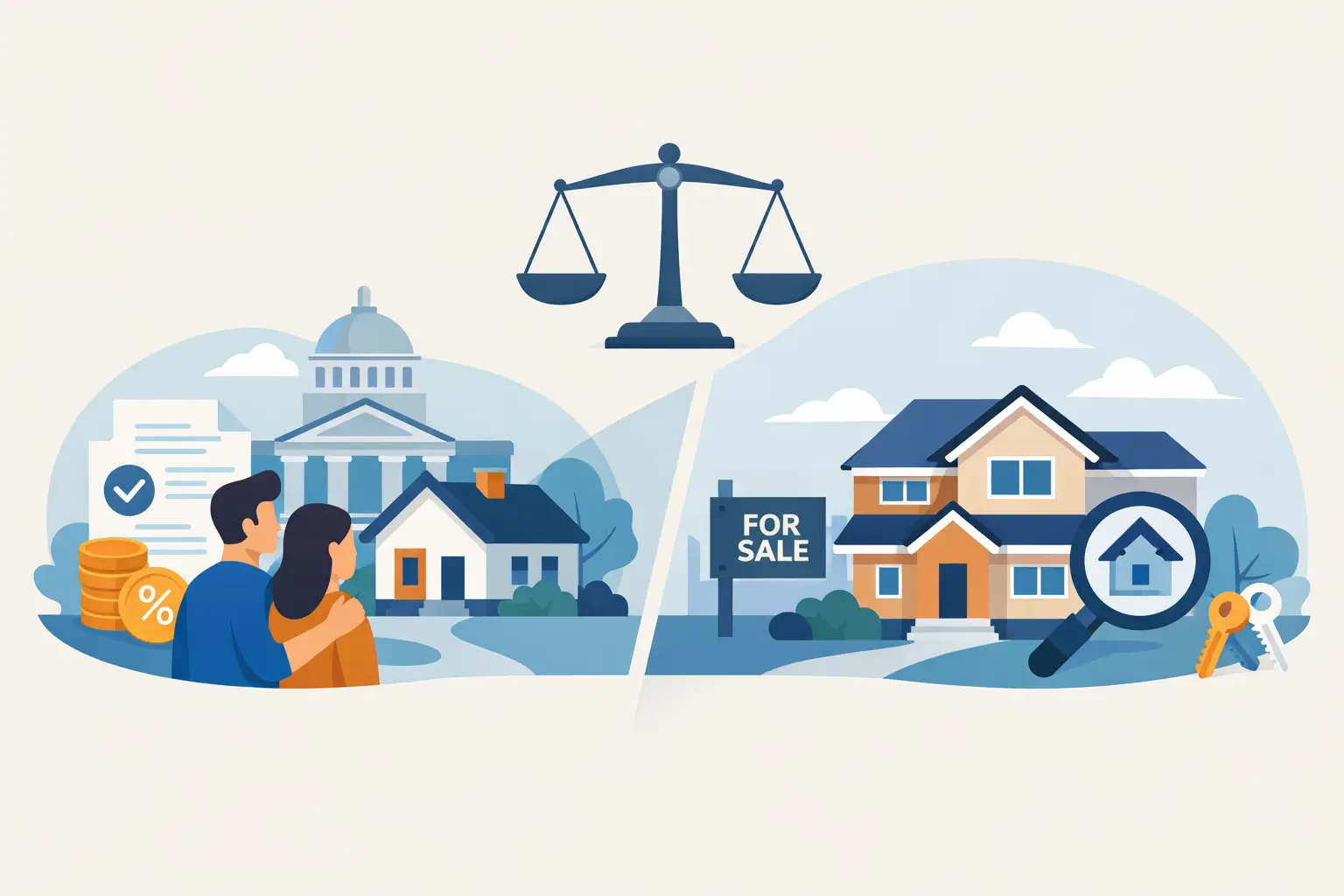
FHA Loan vs Conventional – Which Fits You?
A $325,000 home can look affordable on paper, then the loan details change the monthly payment, cash needed at closing, and long-term cost. In the FHA loan vs conventional decision, the best answer is not simply the loan with the lowest advertised rate. It is the loan that fits your credit profile, savings, property plans, and comfort with monthly mortgage insurance.
Both loan types can help qualified buyers purchase a primary residence. FHA financing is backed by the Federal Housing Administration and is often a strong starting point for buyers with limited down payment funds or less-than-perfect credit. Conventional loans are not government-insured and generally follow standards set by Fannie Mae and Freddie Mac. They can offer more flexibility and lower costs for borrowers with stronger financial profiles.
FHA Loan vs Conventional: The Core Difference
FHA loans are designed to expand access to homeownership. Because the government insures the lender against part of the risk, FHA guidelines can be more forgiving about credit history, down payment funds, and debt-to-income ratio. That flexibility can make a meaningful difference for a first-time buyer who has reliable income but has not yet built a high credit score or substantial savings.
Conventional loans put more emphasis on the borrower’s credit, assets, and overall financial picture. That does not mean they are only for buyers with 20% down. Many conventional programs allow down payments as low as 3% for eligible borrowers. Instead, a conventional loan often rewards stronger credit and a larger down payment with better pricing and less expensive mortgage insurance.
The right comparison is not FHA versus 20% down. For many buyers, it is FHA with 3.5% down versus conventional with 3%, 5%, or 10% down. A loan officer can run each scenario using the same purchase price and estimate the real difference in cash to close and monthly payment.
Down Payment and Credit Requirements
An FHA loan may allow as little as 3.5% down with a credit score of 580 or higher. Borrowers with scores between 500 and 579 may be eligible with 10% down under FHA guidelines, though individual lenders may have higher requirements. A lower score does not automatically prevent someone from buying, but it can affect available options and approval terms.
Conventional credit requirements vary by program and lender. A 620 score is often a common starting point, but qualification depends on more than one number. Your payment history, debt, income, assets, and the amount you put down all matter. Conventional loans can be especially attractive when your credit is in the mid- to high-600s or above, because stronger credit often reduces both the interest rate and private mortgage insurance cost.
A buyer with a 640 score and a modest savings cushion may find FHA more accessible. A buyer with a 740 score and 5% or 10% down may discover that a conventional loan creates a lower monthly payment. Those are examples, not guarantees. Rates, mortgage insurance pricing, and lender guidelines change, so reviewing current numbers matters.
Mortgage Insurance Can Change the Long-Term Cost
Mortgage insurance is one of the most important distinctions between these options. FHA loans require both an upfront mortgage insurance premium and an annual mortgage insurance premium paid in monthly installments. The upfront premium is commonly financed into the loan amount, which reduces the cash required at closing but increases the balance you repay.
For most FHA borrowers who put less than 10% down, annual mortgage insurance remains for the life of the loan. If you put 10% or more down, it may end after 11 years. That structure is why FHA can be a practical way to buy sooner but may become less appealing over time if your credit and equity improve. Some homeowners later refinance into a conventional loan to eliminate FHA mortgage insurance, provided they qualify and the refinance makes financial sense.
Conventional loans with less than 20% down generally require private mortgage insurance, known as PMI. Unlike FHA mortgage insurance, PMI can usually be removed once you meet the required equity threshold. It may be canceled at 80% of the home’s original value or removed automatically at 78%, assuming payments are current and other requirements are met.
The cost of PMI varies significantly. A borrower with excellent credit may pay relatively little, while a borrower with weaker credit may see a higher premium. This is why comparing only the interest rate can lead to the wrong choice. A slightly higher conventional rate with low, removable PMI could cost less than an FHA loan over several years. In another situation, FHA’s rate and approval flexibility may outweigh its mortgage insurance expense.
Rates, Debt, and Approval Flexibility
FHA interest rates can be competitive, particularly for borrowers whose credit profile would receive less favorable conventional pricing. FHA also tends to allow more flexibility with debt-to-income ratios when the full file shows compensating strengths, such as dependable income, cash reserves, or a history of making housing payments.
Conventional underwriting can be more restrictive in some scenarios, but it is not a one-size-fits-all process. Stable employment, strong reserves, a lower debt load, and good credit can make a conventional approval straightforward. Conventional financing also offers broader options for second homes and investment properties, while FHA loans are intended for owner-occupied primary residences.
Neither program should be viewed as a judgment of your financial habits. FHA is not a “bad credit loan,” and conventional is not automatically the better loan because it sounds more traditional. Each program has a purpose. The goal is to match the mortgage to where you are now and where you expect to be in the next few years.
Property Rules and Purchase Scenarios
FHA appraisals include a property condition review intended to confirm the home meets minimum safety, security, and soundness standards. A home with peeling lead-based paint, a damaged roof, missing handrails, or significant repair issues may need repairs before closing. This can be helpful protection for a buyer, but it can also create challenges in a competitive market when a seller wants a quick, uncomplicated sale.
Conventional appraisals focus on value and marketability, although the property still must meet lender standards. They may be a better fit for a home that needs cosmetic updates or for buyers considering a wider range of property types. If you are shopping for a condo, manufactured home, or a property with visible repair needs, discuss the details early. Loan eligibility can depend on both the buyer and the home.
Seller concessions are another useful point of comparison. FHA generally allows sellers to contribute up to 6% of the sales price toward allowable closing costs and prepaid expenses. Conventional limits vary based on occupancy and down payment. Seller help can reduce the cash you need to bring to closing, but it cannot replace the down payment requirement.
When FHA May Be the Better Choice
FHA may deserve serious consideration if a lower down payment is your priority, your credit needs more time to recover, or you have had a past credit event that conventional underwriting may treat more strictly. It can also work well for a buyer who expects income growth, improved credit, or future equity that could support refinancing later.
For example, a buyer who has been paying rent on time but has a 625 score after resolving medical collections may be able to purchase with FHA sooner than with a conventional program. Buying a stable home and building equity may be the right next step, as long as the monthly payment fits comfortably within the household budget.
When Conventional May Be the Better Choice
Conventional financing is often worth prioritizing when you have good credit, funds for at least a modest down payment, and the goal of limiting long-term mortgage insurance costs. It can also be the better path if you plan to buy a second home, purchase an investment property, or make an offer where fewer FHA property requirements may help the transaction move more smoothly.
A buyer with a solid credit score and 10% down might pay less in mortgage insurance on a conventional loan, then have the opportunity to remove PMI as equity grows. If you can put 20% down, conventional financing typically avoids monthly mortgage insurance altogether.
Look Beyond the Approval Letter
Being approved is only the beginning. Before choosing a loan, compare the estimated monthly payment, interest rate, annual percentage rate, cash to close, mortgage insurance, and the point at which that insurance could end. Consider how long you expect to stay in the home. A loan that costs less during the first three years may not be the least expensive choice over 10 years, and the reverse can also be true.
A personalized review can make those trade-offs much clearer. Red Tree Mortgage can help you compare real loan scenarios, answer the questions that matter to your family, and move forward without pressure. The right mortgage should support your next chapter, not leave you second-guessing the payment after closing.

Related Posts