Can sellers pay closing costs? Learn how seller concessions work, loan limits, and negotiation strategies that can make your home purchase easier today.
What Credit Score for Mortgage Approval?
A lot of buyers ask the same question early in the process: what credit score for mortgage approval do I need? It is a fair question, but the most honest answer is that there is no single number that guarantees approval. Your credit score matters, sometimes a lot, but lenders also look at your income, debt, down payment, cash reserves, and the type of loan you want.
That can feel frustrating if you were hoping for a neat cutoff. Still, it is better to understand how mortgage lending really works than to focus on one number and miss the bigger picture. A strong application is rarely built on credit score alone.
What credit score for mortgage approval is considered good?
In general, higher credit scores give you more options and better pricing. Many conventional loans become more favorable once your score reaches the mid- to upper-600s, and stronger terms are often available for borrowers in the 700s and above. But there are also government-backed programs designed to help borrowers with more modest credit profiles.
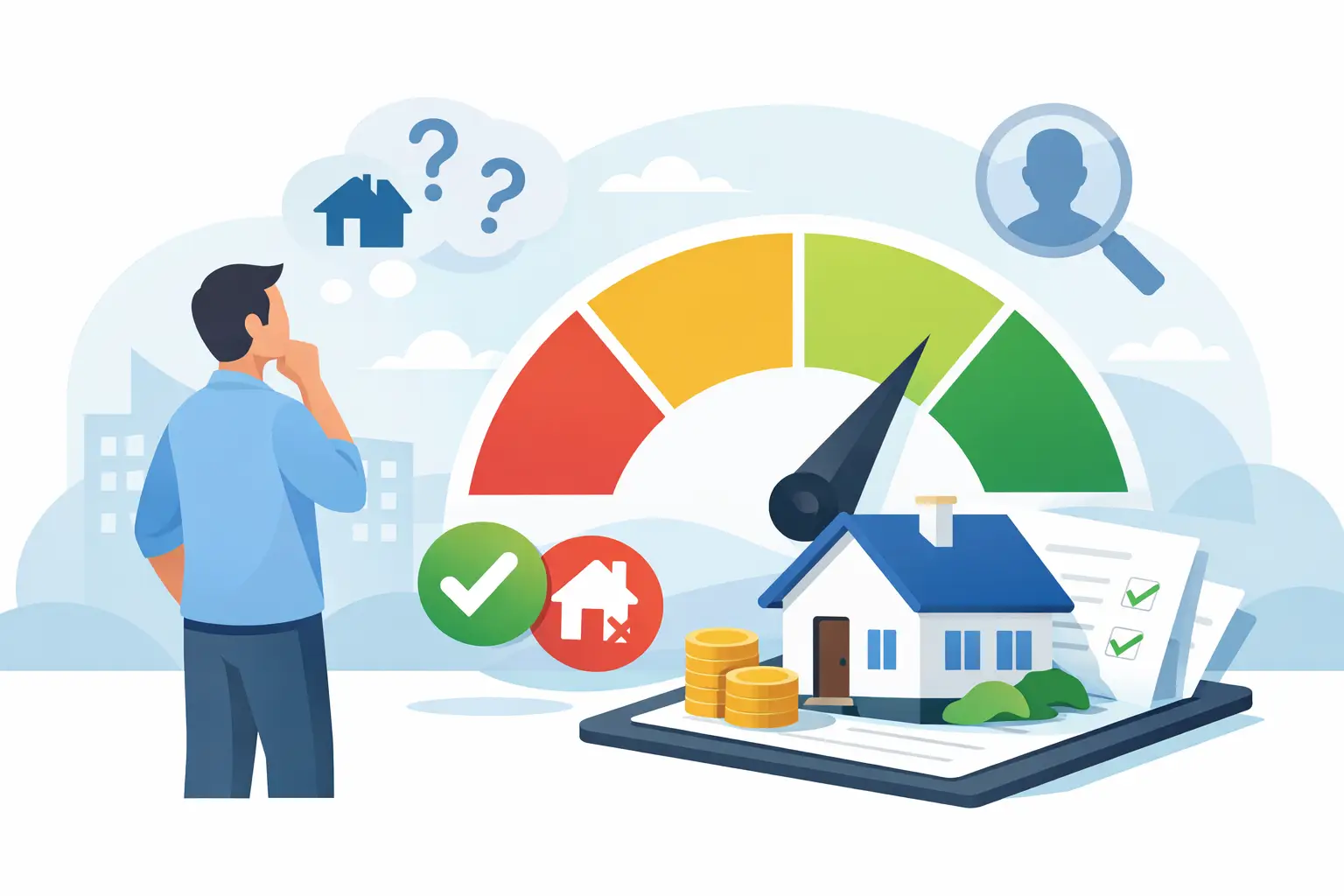
A practical way to think about it is in ranges instead of one magic score. If your score is below 620, your options may narrow, but they may not disappear. If you are between 620 and 679, you may still qualify for several mortgage programs, though your interest rate and monthly payment could be higher. If you are at 680 or above, you will often have a more flexible path. If you are in the 740+ range, you are generally in a stronger position for pricing.
Those ranges are not promises. Loan guidelines vary, and lenders apply overlays, pricing adjustments, and underwriting standards differently. The same borrower can look stronger on one loan program than another.
Minimum credit score by mortgage type
The loan program matters because each one has its own credit expectations.
Conventional loans
Conventional loans often require a higher credit profile than some government-backed options. Many borrowers look for at least a 620 score to be considered, but eligibility and pricing improve as your score rises. If your score is on the lower end, a larger down payment, low debt levels, or stronger cash reserves can help support the file.
For many buyers, conventional financing becomes especially attractive when credit is solid because mortgage insurance and pricing can be more competitive over time. On the other hand, if your score is only fair, conventional may not always be the most cost-effective choice.
FHA loans
FHA loans are popular with first-time buyers and borrowers rebuilding credit because they can be more flexible. In many cases, borrowers may qualify with lower scores than conventional financing allows. That said, lower-score FHA files often come with stricter review and may require stronger compensating factors such as stable income or additional savings.
FHA can be a good fit when credit is not perfect, but there is a trade-off. Mortgage insurance is part of the equation, and that can affect your monthly payment and long-term cost.
VA loans
VA loans can be an excellent option for eligible veterans, active-duty service members, and certain surviving spouses. The VA does not set a universal minimum score in the same way many people expect, but lenders usually do have their own requirements. Borrowers who qualify for VA financing often benefit from flexible underwriting, no down payment options, and competitive terms.
If you are eligible, a lower credit score does not automatically rule you out. What matters is how the full application comes together.
USDA loans
USDA loans are designed for eligible rural and suburban properties and can be a strong choice for borrowers who meet income and property guidelines. Credit standards are often flexible, but approval still depends on the full loan profile. For qualified buyers, USDA can offer low upfront cash needs, which makes it worth exploring.
Jumbo loans
Jumbo loans usually require stronger credit because the loan amount exceeds conforming limits and the lender is taking on more risk. Many jumbo borrowers need higher scores, lower debt ratios, and larger reserves. If you are shopping at a higher price point, your credit score tends to carry more weight.
Why your credit score is not the whole story
A borrower with a 680 score and low debt may be in better shape than someone with a 720 score and heavy monthly obligations. That is why lenders review more than the score itself.
Your debt-to-income ratio is a major factor. If too much of your monthly income is already committed to car loans, student loans, credit cards, or personal loans, qualifying can become harder even with decent credit. Your down payment also matters. More money down can reduce lender risk and improve your options.
Employment history and income stability count too. A reliable two-year work history, consistent earnings, and sufficient assets can strengthen a file. If your credit score is borderline, these areas may help offset some concerns.
Lenders also review the details inside your credit report, not just the number it produces. A single isolated late payment from two years ago is different from recent missed payments, collections, or a pattern of maxed-out accounts.
What can hurt your mortgage chances even with a decent score?
This is where many buyers get surprised. You can have a credit score that looks acceptable and still run into issues.
Recent late payments are one common problem. So are high credit card balances. Even if you pay on time, using a large share of your available credit can affect both your score and your overall risk profile. New debt taken on right before applying can also work against you, especially if it raises your monthly obligations.
Major derogatory events such as bankruptcies, foreclosures, charge-offs, or judgments may trigger waiting periods or more detailed underwriting review. The impact depends on how recent the event was, what loan program you want, and how strong your credit behavior has been since then.
A thin credit file can also create challenges. If you do not have much established credit history, the issue may not be bad credit but limited data. In some cases, that can still be worked through, but it usually requires a closer look.
How to improve your score before applying
If you are asking what credit score for mortgage approval you need, there is a good chance you are still in the planning phase. That is actually a great place to be because small changes made early can make a meaningful difference.
Start by paying every bill on time. Payment history has a major impact on your score, and consistency matters more than quick fixes. Next, focus on reducing credit card balances. Lower utilization can help your score and improve your debt picture at the same time.
Avoid applying for new credit unless it is truly necessary. A new car loan, new credit card, or personal loan before mortgage application can shift your ratios and your score in the wrong direction. It is also wise to review your credit report for errors. Incorrect late payments, duplicated accounts, or balance reporting mistakes can drag your score down unfairly.
If your score is close to an important threshold, timing can matter. Moving from one bracket to another may improve pricing enough to lower your monthly payment. This is one reason a conversation with an experienced loan officer can be valuable before you formally apply.
When it makes sense to apply anyway
Sometimes waiting for a better score is smart. Sometimes it is not.
If home prices are rising in your market, waiting six or twelve months to improve your score may not always save money overall. The same goes for interest rates. A slightly lower score today could still lead to a better outcome than chasing a perfect number while affordability moves against you.
There are also borrowers who assume they are not mortgage-ready when they actually have workable options right now. FHA, VA, USDA, low down payment solutions, and other programs exist because many qualified buyers do not fit one narrow credit profile. At Red Tree Mortgage, this is often where personalized guidance matters most – looking at the whole scenario instead of reducing someone to a score alone.
The best next step if you are unsure
If you are not sure where you stand, resist the urge to guess. Mortgage credit is more nuanced than the advice you get from friends, social media, or a generic online chart.
A real review of your numbers can show you whether you are ready now, what programs fit best, and whether a few targeted changes could improve your position. For some buyers, that means applying soon. For others, it means spending a little time paying down balances or correcting report issues before moving forward.
The right credit score for a mortgage is not just about clearing a minimum. It is about putting yourself in the strongest position possible for the home, payment, and loan structure that fit your life. A good lender should help you see that clearly and move at a pace that makes sense for you.

Related Posts