Buying a house with FHA can make homeownership more accessible. Learn the down payment, credit, insurance, and property rules before making your offer.
Best Loan Options for Veterans Buying a Home
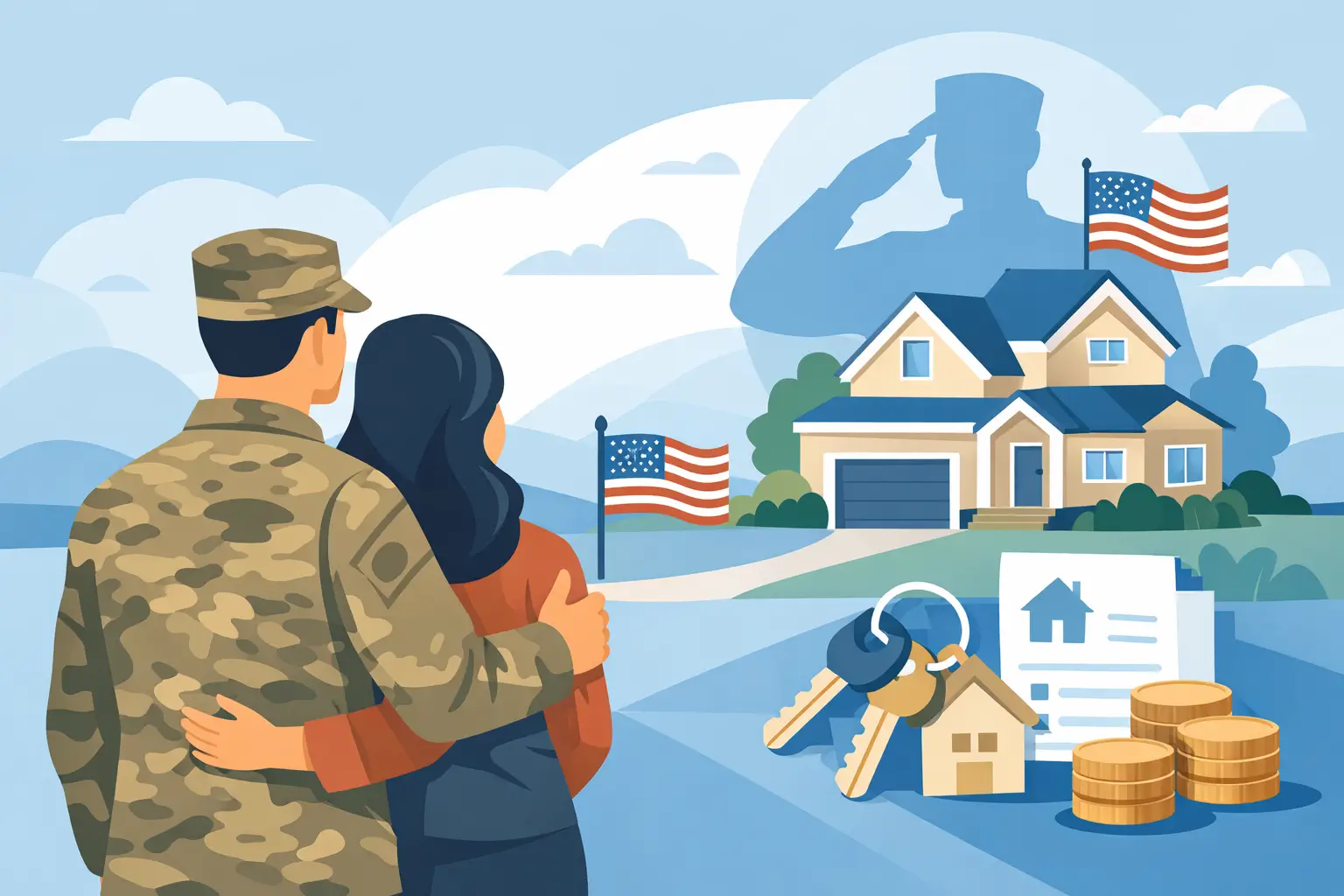
For many service members, veterans, and surviving spouses, the best loan options veterans can access begin with a benefit earned through service: the VA home loan. But the right mortgage is not automatically the VA loan in every situation. Your purchase price, down payment, credit profile, property type, and long-term plans all deserve a place in the conversation.
A good lender should not hand you a one-size-fits-all answer. They should walk through the numbers with you, explain the trade-offs clearly, and help you choose financing that supports both the home you want and the life you want to build in it.
Best Loan Options for Veterans: Start With VA Financing
For eligible borrowers, a VA loan is often the strongest place to start. VA loans are backed by the Department of Veterans Affairs and issued by approved private lenders. The program is designed to make homeownership more attainable for veterans, active-duty service members, certain National Guard and Reserve members, and eligible surviving spouses.
The feature most people know is the potential for zero down payment. Qualified borrowers can often finance a home purchase without bringing a traditional down payment to closing. That can preserve savings for moving costs, repairs, furnishings, and the unexpected expenses that come with settling into a new home.
VA financing also does not require monthly private mortgage insurance, even when the borrower puts little or no money down. On a conventional loan, private mortgage insurance can add a meaningful monthly cost when the down payment is below 20%. Removing that expense may improve purchasing power or make the monthly payment more comfortable.
VA loans can offer competitive interest rates, and their underwriting approach considers more than a credit score alone. Lenders review income, debts, credit history, and residual income – the money left after major monthly obligations. That does not mean approval is automatic. It means the review is built to look at a borrower’s ability to sustain homeownership.
There are limits to understand. Most VA purchase loans include a funding fee, although some borrowers are exempt, including many veterans with qualifying service-connected disability compensation. The fee may be financed into the loan amount, which reduces upfront costs but increases the balance and interest paid over time. A VA appraisal also has property condition standards. Those standards help protect buyers, but they can create complications when a home needs significant repairs or when a seller is unwilling to address required issues.
Before shopping, request your Certificate of Eligibility, or COE. It confirms that you meet the VA program’s service requirements. A lender can often help retrieve it, then review your entitlement and buying scenario.
VA Purchase Loans for a Primary Residence
A VA purchase loan is intended for a home you will occupy as your primary residence. Eligible property types can include a single-family home, an approved condominium, certain multi-unit properties where you live in one unit, and some manufactured homes. Investment-only properties and vacation homes generally do not qualify.
If you are buying a duplex, triplex, or four-unit property and plan to live in one unit, VA financing may be worth exploring. Rental income from the other units may help support qualification under the right circumstances. These purchases have more moving parts, so early guidance matters.
VA IRRRL and VA Cash-Out Refinance
Veterans who already have a VA loan may have refinance choices as well. A VA Interest Rate Reduction Refinance Loan, often called an IRRRL or streamline refinance, is designed for replacing an existing VA loan with another VA loan, usually to lower the interest rate or change the term. Documentation and appraisal requirements may be lighter than with a standard refinance, depending on the scenario.
A VA cash-out refinance can replace a current mortgage and allow an eligible homeowner to access equity. Unlike an IRRRL, it may be used even when the existing mortgage is not a VA loan. Cash-out refinancing can be useful for consolidating higher-interest debt, funding major home improvements, or addressing a significant financial need. It should be approached carefully, though. Turning short-term debt into mortgage debt can extend repayment for years, and taking cash out may raise your payment or total borrowing cost.
When a Conventional Loan May Be the Better Fit
A conventional mortgage is not a lesser option simply because a borrower is eligible for VA benefits. In some cases, it can be the more practical choice.
For example, a veteran with a sizable down payment may qualify for a conventional loan without private mortgage insurance. If that loan offers favorable pricing for the borrower’s profile, the overall cost may compare well with a VA loan that includes a funding fee. Conventional financing can also be useful for a second home or investment property, which VA financing generally cannot cover.
Property condition may influence the decision, too. If a home has deferred maintenance that could be difficult to resolve before closing, a conventional loan may have more flexibility than a VA loan. That should never be a reason to ignore serious repair concerns. It simply means the financing conversation should match the condition of the property.
Conventional loans commonly offer fixed-rate terms of 10, 15, 20, or 30 years, along with adjustable-rate options. A shorter term can reduce total interest but raises the monthly payment. A 30-year fixed-rate loan usually creates a lower payment and predictable principal and interest, which many buyers value when planning a household budget.
FHA Loans Can Help in Specific Situations
An FHA loan may be a useful alternative for veterans who do not currently meet a lender’s VA eligibility requirements, need more flexibility with credit history, or are buying under circumstances where FHA underwriting is a better fit. FHA loans allow low down payments for qualified borrowers and are widely used by first-time buyers.
The trade-off is mortgage insurance. FHA financing generally includes both an upfront mortgage insurance premium and a monthly premium. Depending on the loan terms and down payment, that monthly cost can remain for much of the loan’s life. For an eligible veteran, a VA loan often provides a more favorable path because it does not require monthly mortgage insurance. Still, FHA deserves comparison when a VA loan is unavailable or the details of the transaction point in another direction.
USDA Loans for Eligible Rural and Suburban Areas
USDA loans can be an excellent option for buyers purchasing in eligible rural and suburban communities. Like VA loans, they can offer zero-down financing to qualified borrowers. However, USDA loans have household income limits and location requirements, and the property must be in an eligible area.
This option can be especially relevant for buyers looking beyond a major metro area in states such as Pennsylvania, Ohio, or North Carolina. A town may feel suburban and still fall within an eligible USDA area. Because eligibility depends on a specific address and household income, it is worth checking rather than assuming a property does or does not qualify.
USDA loans include guarantee fees, so compare the total monthly payment and closing costs against VA, FHA, and conventional options. The lowest advertised rate is not always the lowest-cost loan.
Jumbo Loans for Higher-Priced Homes
Veterans can use VA financing for high-priced homes, including in areas where home values are above standard conforming loan limits. With full entitlement, there is no longer a county loan limit that caps the VA loan amount itself. Lenders will still evaluate income, credit, debt, appraisal value, and overall risk carefully.
A jumbo loan may also be appropriate for a higher-priced purchase, particularly if the property is a second home, an investment property, or otherwise outside VA occupancy rules. Jumbo underwriting can be more demanding, often requiring stronger credit, cash reserves, and a lower debt-to-income ratio. The right answer depends on the purchase, not just the loan amount.
Compare the Full Cost, Not Just the Rate
When comparing mortgage options, ask for clear loan scenarios that show the interest rate, annual percentage rate, estimated monthly payment, cash needed to close, mortgage insurance or funding fees, and projected closing costs. A lower rate can be appealing, but paying points to obtain it may not make sense if you expect to move or refinance in a few years.
Also consider how long you expect to keep the loan. If one option saves $75 per month but costs $4,500 more at closing, it takes about five years to recover that cost. That break-even point should be part of your decision, alongside your comfort with the payment and your goals for the property.
A preapproval is more than a price range. It is an opportunity to identify issues early, such as a debt that needs to be paid down, a credit item that needs clarification, or documentation needed for variable income. For veterans using VA benefits, it is also the time to confirm entitlement and understand how the funding fee applies.
The home loan that serves you best should feel understandable before you sign, not after. Bring your questions, your plans, and your full financial picture to the conversation. With patient guidance and honest comparisons, you can move forward knowing your mortgage was chosen with the same care you brought to earning the opportunity to own a home.

Related Posts