Can sellers pay closing costs? Learn how seller concessions work, loan limits, and negotiation strategies that can make your home purchase easier today.
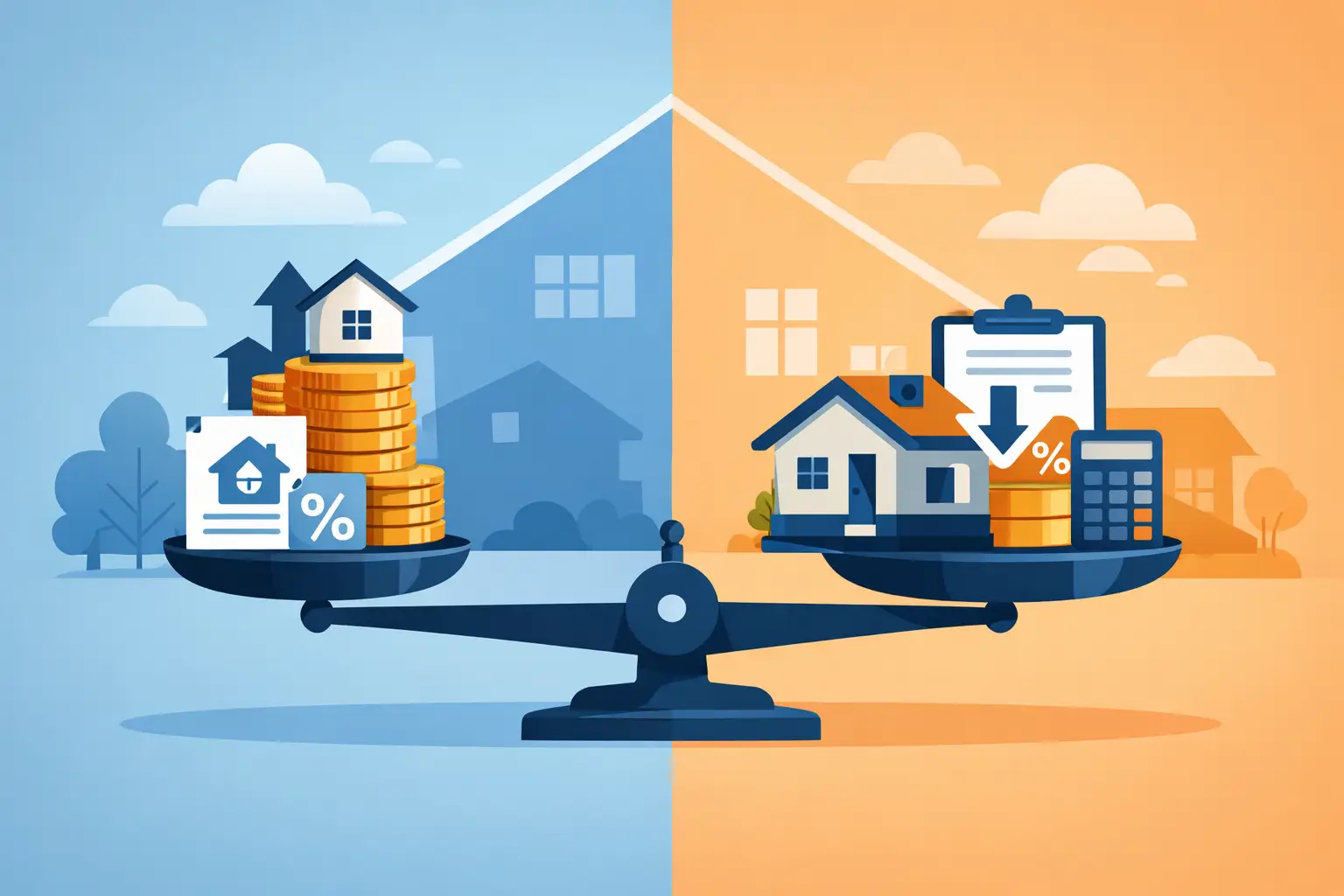
Home Equity Loan Versus Refinance Compared
A new roof, high-interest debt, a growing family, or an investment opportunity can all raise the same question: should you use your home’s equity without disturbing your current mortgage? Comparing a home equity loan versus refinance starts with one practical fact – one option adds a loan to your existing mortgage, while the other replaces it. The better choice depends on your current rate, the amount you need, your long-term plans, and how comfortably a new payment fits your budget.
Home equity can be a valuable financial resource, but it is not free money. Your home serves as collateral, so a thoughtful decision now can help protect both your monthly cash flow and the home you have worked hard to build.
Home equity loan versus refinance: the core difference
A home equity loan is a separate loan secured by your home. It is often called a second mortgage because it sits behind your existing primary mortgage. You receive the approved amount in one lump sum, then repay it through scheduled monthly payments, usually at a fixed interest rate.
A refinance replaces your existing mortgage with a new one. With a rate-and-term refinance, the goal may be to lower your rate, change your loan term, or move from an adjustable-rate mortgage to a fixed-rate loan. With a cash-out refinance, the new mortgage is larger than your current payoff balance, and you receive the difference in cash after closing.
That distinction matters most when you have an attractive first-mortgage interest rate. If you bought or refinanced when rates were lower, a home equity loan may let you keep that rate in place and borrow only what you need. If your current rate is higher than today’s available refinance rates, replacing the entire loan could make more sense.
When a home equity loan may be the better fit
A home equity loan can be worth considering when you need a defined amount for a one-time expense. Home improvements, a major repair, education expenses, or consolidating higher-rate debt are common examples. Because you receive a lump sum and typically have a fixed rate and payment, it can be easier to plan around than a revolving line of credit.
This route is often especially appealing when your current first mortgage has a low rate. Rather than refinancing a large remaining balance at a potentially higher rate, you leave that loan untouched and borrow a smaller amount separately.
For example, imagine you owe $250,000 on a 30-year fixed mortgage at 3.25% and need $50,000 for a substantial home renovation. A cash-out refinance would replace the full $250,000 balance and add the money you need. A home equity loan keeps the 3.25% mortgage in place and applies the new borrowing rate only to the $50,000.
There are trade-offs. You will have two monthly mortgage payments to manage, and the combined payment may still be significant. Home equity loans can also carry closing costs, and the rate on the second loan may be higher than the rate on a first mortgage. The lender will evaluate your income, credit, debt-to-income ratio, home value, and the total amount borrowed against the property.
When refinancing may make more financial sense
Refinancing can be a stronger option when it improves more than one part of your financial picture. Perhaps your current mortgage rate is high, your payment needs to become more predictable, or you want to eliminate mortgage insurance after your home has gained value and you have sufficient equity. A refinance may also simplify your finances by leaving you with one mortgage payment instead of two.
A cash-out refinance can provide a larger amount of money than a home equity loan in some situations, subject to loan program guidelines and available equity. It may also offer a lower interest rate than a second mortgage because the new loan is secured as the primary lien on the home.
Still, a lower payment does not automatically mean lower cost. Extending the repayment period can reduce the payment while increasing the total interest paid over time. If you are several years into your current mortgage, starting a fresh 30-year term resets the repayment clock unless you choose a shorter term or make extra principal payments.
Refinancing also involves closing costs, which can include lender fees, title-related fees, prepaid items, and an appraisal when required. A lender can help you compare those costs against the projected savings and estimate how long you would need to keep the loan for refinancing to make financial sense.
Compare the numbers that matter most
The interest rate gets attention, but it should not make the decision by itself. A clear side-by-side review should include the total monthly payment, the cash you receive, estimated closing costs, loan term, and projected total interest over time.
Start by looking at your existing mortgage balance and interest rate. If your current rate is considerably lower than the rate available on a new first mortgage, preserving it may carry real value. Next, consider how much money you truly need. Borrowing only the amount needed through a home equity loan can be more efficient than refinancing a much larger balance.
Then look at the payment from a household perspective. A home equity loan creates a second payment, often with a shorter repayment term. A cash-out refinance rolls the debt into one payment, but the new loan balance may be repaid over a longer period. Neither structure is automatically better. The right answer is the one that supports your financial goals without putting undue pressure on your monthly budget.
Your timeline matters, too. If you expect to sell the home in a few years, substantial refinance closing costs may be harder to recover. If you plan to remain in the home for a long time, a refinance that improves your rate or loan structure may have more room to deliver value.
Know how equity and loan limits work
Equity is the difference between your home’s current market value and what you owe on it. If your home is worth $400,000 and you owe $240,000, you have $160,000 in equity. That does not mean you can borrow the entire $160,000.
Lenders use a combined loan-to-value ratio, often called CLTV, to measure the total amount of mortgage debt against the home’s value. Your primary mortgage, home equity loan, or line of credit are considered together. The maximum allowed CLTV varies by loan type, property use, credit profile, and other underwriting factors.
An appraisal or other approved property valuation may be needed to confirm your home’s value. Strong equity helps, but approval also depends on reliable income, credit history, existing debts, and the ability to repay the new obligation.
Avoid a few common decision traps
Do not choose a home equity loan simply because you want to avoid refinancing, or refinance simply because one payment sounds easier. Both can be sound choices, but only after the details are reviewed.
Be careful about using secured home debt to consolidate unsecured debt without changing the spending pattern that created the balances. A lower rate can help, but missed payments put your home at risk. It is also wise to avoid borrowing more than your project or goal requires just because equity is available.
Finally, ask whether a different mortgage option fits better. A home equity line of credit may be useful when expenses will occur over time rather than in one lump sum. A rate-and-term refinance may be all you need if your main goal is a better mortgage structure, not cash out.
Get guidance built around your goals
The best way to decide is to review real loan scenarios using your current mortgage statement, estimated home value, income, debts, and goals for the property. An experienced loan officer can show you how a home equity loan and refinance option would affect your payment, closing costs, and long-term borrowing costs before you commit.
At Red Tree Mortgage, we believe a financing decision deserves clear answers and personal guidance, not a one-size-fits-all recommendation. Bring the questions that matter to your family, and take the time to choose a path you can feel confident carrying forward.

Related Posts