
Our USDA home loan guide explains eligibility, income, property rules, costs, and the steps to buy a home with no down payment in eligible rural areas.
How Escrow Accounts Work With Your Mortgage
Your mortgage payment may look like one number, but it often handles more than principal and interest. Understanding how escrow accounts work helps you see where part of that payment goes, why it can change from year to year, and how it protects your home from missed tax or insurance bills.
For many homeowners, escrow is a practical convenience. Instead of setting aside large property tax and homeowners insurance payments on your own, your mortgage servicer collects a portion each month and pays those bills when they come due. Still, it is your money and your responsibility to understand the account.
How Escrow Accounts Work With a Mortgage
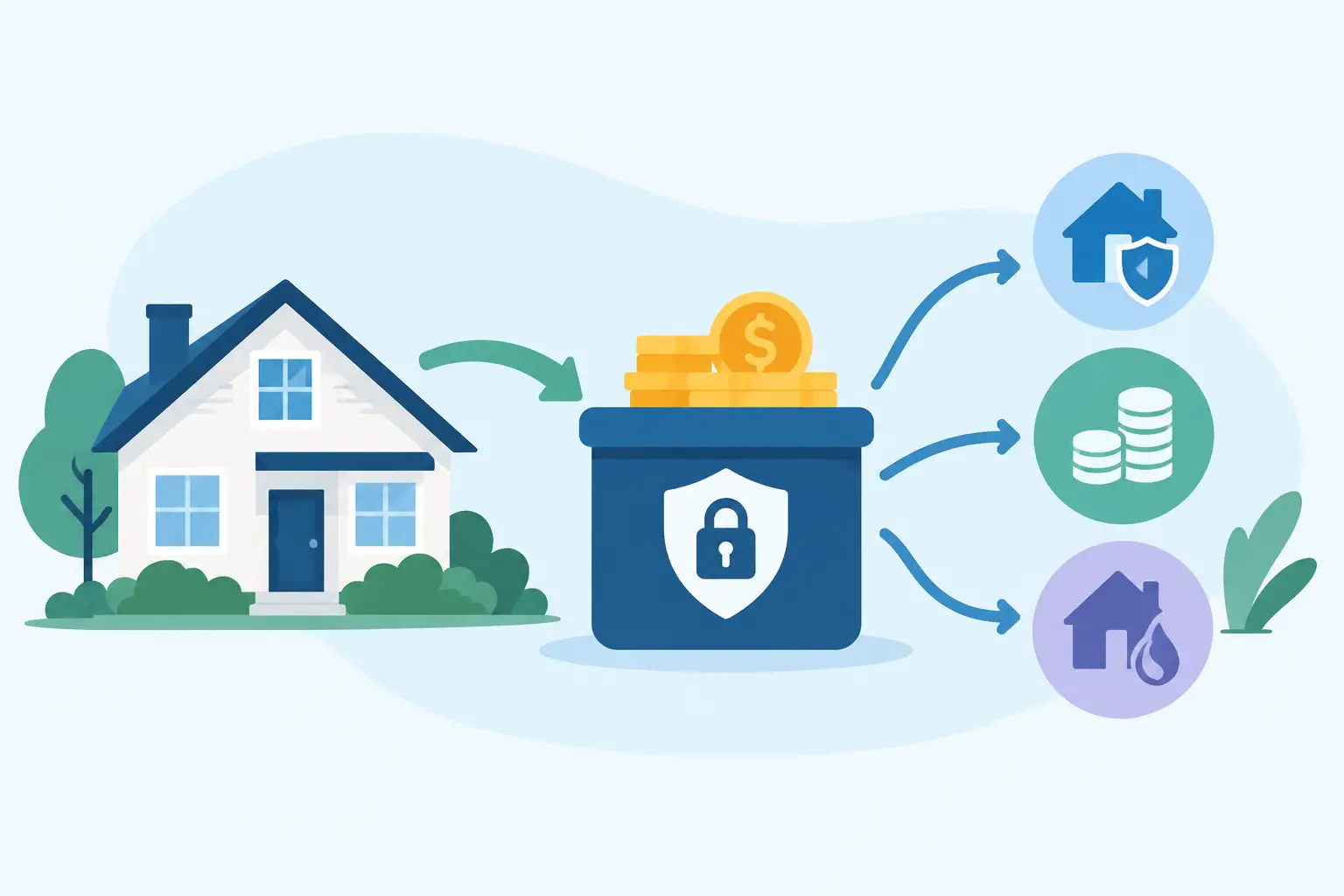
A mortgage escrow account is a separate account managed by your loan servicer. Each month, you pay an estimated amount for property taxes and homeowners insurance along with your regular mortgage payment. The servicer holds those funds, then sends payment to your local tax authority and insurance company when the bills are due.
Your monthly mortgage payment is commonly described as PITI:
- Principal – the amount that reduces your loan balance
- Interest – the cost of borrowing the money
- Taxes – local property taxes collected for your escrow account
- Insurance – homeowners insurance premiums collected for your escrow account
If you have mortgage insurance, flood insurance, or other required coverage, those costs may also be included in your escrow payment. The exact setup depends on your loan terms, your property, and the insurance required for your location.
This arrangement does not make taxes or insurance less expensive. It simply spreads those costs across 12 monthly payments rather than leaving you to pay a large bill once or twice a year.
Escrow During a Home Purchase Is Different
The word “escrow” can also refer to the period between signing a purchase agreement and closing on a home. Although both uses involve a neutral party holding funds or documents, they serve different purposes.
During a purchase, an escrow or settlement agent may hold your earnest money deposit. That deposit shows the seller you are serious about buying the property. The funds are held until closing or distributed according to the purchase agreement if the transaction does not move forward.
Mortgage escrow begins after closing, when your servicer starts collecting money for future tax and insurance bills. It is common for buyers to hear “escrow” used in both situations, which can make the process feel more confusing than it needs to be.
Why Lenders Require Escrow Accounts
Lenders have a financial interest in making sure the home securing the mortgage is insured and free from unpaid property tax liens. If property taxes go unpaid, a taxing authority may place a lien on the home. If insurance lapses and a major loss occurs, both you and the lender could face serious financial consequences.
For that reason, escrow is often required for government-backed loans, including FHA, VA, and USDA mortgages. Conventional loan requirements vary. A lender may require escrow based on your down payment, loan type, credit profile, or applicable state and federal rules.
Even when an escrow waiver is available, it may come with conditions. Some lenders require a larger down payment, charge a fee, or adjust the interest rate. Paying taxes and insurance yourself can offer more direct control, but it also requires consistent budgeting. Missing either bill can be costly.
What You Pay at Closing
At closing, buyers typically make an initial escrow deposit. This is not a duplicate payment. It gives the new escrow account enough money to cover bills that may come due before a full year of monthly escrow contributions has accumulated.
For example, suppose property taxes are due several months after you close. The lender may collect a few months of estimated tax payments upfront so the account has enough available when that bill arrives. You may also prepay a portion of your homeowners insurance premium at closing.
Your Closing Disclosure will show the estimated initial escrow payment. Reviewing it with your loan officer before closing is a good opportunity to ask what is being collected and when the first tax and insurance payments are expected.
Why Your Mortgage Payment Can Change
A fixed-rate mortgage keeps your principal and interest payment stable. It does not guarantee that your total monthly payment will never change. Taxes and insurance can rise or fall, and those changes affect the escrow portion of your payment.
Each year, your servicer performs an escrow analysis. It reviews the amount collected, the bills paid from the account, and the projected costs for the coming year. The analysis also accounts for a permitted cushion, which is a small reserve intended to help prevent the account from running short before the next payment is collected.
If your property taxes increase, your insurance premium rises, or the prior estimate was too low, you may have an escrow shortage. In that case, the servicer generally gives you options to pay the shortage in a lump sum or spread it across future monthly payments. Your regular escrow contribution may also increase to cover the higher projected bills.
If there is more money in the account than allowed, you may receive an escrow refund or credit. That does not necessarily mean your next payment will go down. Your upcoming tax and insurance estimates still determine what must be collected going forward.
A Simple Escrow Example
Imagine your annual property taxes are $4,800 and your annual homeowners insurance premium is $1,800. Together, those bills total $6,600 per year. Divided by 12 months, the estimated monthly escrow amount is $550.
If your principal and interest payment is $1,750, your total payment would be approximately $2,300 before considering any mortgage insurance or other applicable charges. The servicer keeps the $550 in escrow and pays the $4,800 tax bill and $1,800 insurance premium when each is due.
Now imagine your insurance premium increases by $600 at renewal. Your annual escrow need increases, and the prior account balance may not have enough to absorb that difference. Your next escrow analysis could raise the monthly payment both to address any shortage and to collect enough for the higher premium in the new year.
What Homeowners Should Watch Closely
Escrow is designed to make homeownership easier to manage, but it should not be a set-it-and-forget-it account. Review your annual escrow statement and compare it with your property tax notice and insurance declarations page. If a bill looks significantly different from the servicer’s estimate, ask questions early.
You should also notify your servicer promptly if you change insurance carriers. Do not assume the new insurer will automatically communicate every detail correctly. Confirm that your servicer has the active policy information, the correct premium, and proof that the policy meets the mortgage requirements.
If you receive a tax bill in the mail, read it carefully. In many cases, it is sent to you for your records even though the escrow account will pay it. The bill should indicate whether a mortgage servicer is expected to make payment. If you are unsure, contact the servicer before paying it yourself. A duplicate payment can create a frustrating refund process.
Can You Remove Escrow From Your Mortgage?
Possibly, but eligibility depends on the loan. Some loans require escrow for the life of the mortgage, while others allow an escrow waiver after you build sufficient equity and meet payment-history requirements. Your servicer can explain its specific rules.
Before removing escrow, consider the real trade-off. You may prefer earning interest on money you set aside or timing your own payments. But you will need a reliable system for saving each month, tracking due dates, and preparing for tax or insurance increases. For homeowners who value predictable monthly budgeting, keeping escrow can be the simpler choice.
A clear explanation can make a mortgage feel far less intimidating. Whether you are preparing to buy, reviewing a payment change, or considering a refinance, Red Tree Mortgage can help you look at the numbers, ask the right questions, and choose a payment structure that supports your homeownership goals.

Related Posts