Learn how to budget closing costs, estimate cash needed at closing, compare loan estimates, and protect your homebuying funds from last-minute surprises.
How to Find the Best Home Purchase Mortgage Rates
A difference of even half a percent can change your monthly payment by hundreds of dollars over time. That is why many buyers start their search by asking where to find the best home purchase mortgage rates. It is a smart question, but the answer is rarely as simple as picking the lender with the lowest advertised number.
Mortgage rates are personal. The rate one borrower sees online may not be the rate another borrower qualifies for after a full review of credit, income, assets, debt, down payment, and property type. If you are buying a home, the better approach is to understand what shapes your rate, how loan options affect pricing, and how to compare offers with confidence.
What affects the best home purchase mortgage rates?
Mortgage rates move for two reasons at once. First, there are market conditions that no single borrower can control. Inflation, bond market activity, Federal Reserve policy signals, and overall economic uncertainty all influence the direction of rates. On some days, pricing improves. On others, it worsens before lunch.
Second, there are borrower-specific factors. This is where strategy matters. Lenders look at your credit score, debt-to-income ratio, employment history, cash reserves, loan amount, down payment, occupancy, and the loan program itself. A buyer with strong credit, stable income, and a larger down payment will usually qualify for more favorable pricing than someone with recent credit issues or a higher debt load.
Property type also plays a role. A primary residence often receives better pricing than an investment property. A single-family home may price differently than a condo. Jumbo loans can carry different rate patterns than conforming loans depending on the market. The idea of the best rate is not one-size-fits-all. It depends on your full financial picture and the home you plan to buy.
The lowest advertised rate is not always the best deal
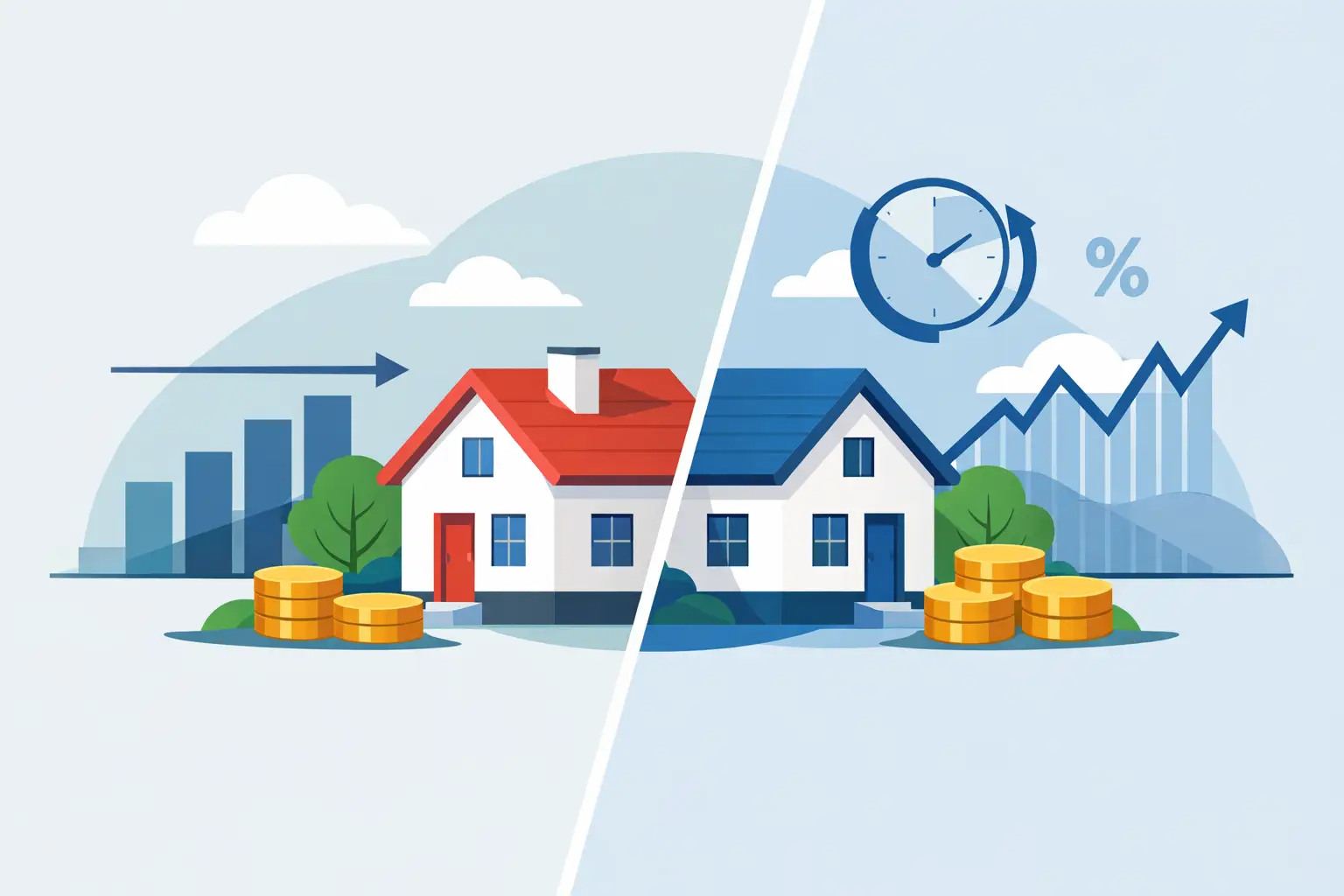
This is where many buyers get tripped up. Advertised rates often assume an ideal borrower profile and may include discount points. A lender may show a lower rate, but that lower rate could require more cash at closing to buy it down. Another lender might offer a slightly higher rate with lower upfront costs.
Neither option is automatically better. If you plan to stay in the home for many years, paying points could make sense because the monthly savings may outweigh the upfront cost over time. If you want to keep more cash on hand for moving expenses, repairs, or savings, a rate with fewer fees may be the stronger choice.
When comparing offers, ask for the full picture. Look at the interest rate, annual percentage rate, lender fees, discount points, estimated monthly payment, and total cash needed to close. The best home purchase mortgage rates should be evaluated alongside the cost of getting them.
Loan type matters more than many buyers expect
Different loan programs come with different pricing structures, mortgage insurance rules, and qualification standards. That is why the right loan can be just as important as the rate itself.
A conventional fixed-rate loan is often a strong fit for buyers with solid credit and a stable down payment strategy. FHA loans can be especially helpful for first-time buyers or borrowers with more limited credit flexibility, though mortgage insurance costs may affect the total payment. VA loans can offer excellent value for eligible veterans and service members, often with competitive rates and no down payment requirement. USDA loans can be a strong option in qualifying rural areas for borrowers who meet income guidelines.
Then there are jumbo loans, rehab loans, and low down payment programs, each with their own pricing realities. A slightly higher rate on a loan program that better fits your goals may still be the smarter financial move. Good mortgage advice is not just about chasing the lowest rate. It is about matching the right financing structure to your budget and long-term plans.
How to improve your rate before you buy
If you are still in the planning phase, there may be time to strengthen your profile before you apply. Small improvements can make a meaningful difference.
Credit is one of the biggest factors. Paying down revolving balances, making every payment on time, and avoiding new credit applications can help support a better score. Even a modest improvement may open the door to stronger pricing.
Your debt-to-income ratio matters too. If possible, reduce monthly obligations before taking on a mortgage. This could mean paying off a car loan, avoiding a new personal loan, or holding off on major financed purchases. A lower debt load can improve both qualification and rate options.
Down payment strategy also matters. In some cases, putting more down can improve pricing or reduce mortgage insurance costs. In others, it may be wiser to keep more reserves available rather than use every dollar upfront. That is where a detailed loan review becomes valuable. The right answer depends on your goals, not just a general rule.
How to compare lenders without getting overwhelmed
Shopping for a mortgage is wise. Shopping without a clear method can be confusing fast.
Start by comparing quotes for the same loan scenario. Use the same purchase price, down payment, property type, occupancy, and estimated credit profile. If one quote is based on a 20 percent down payment and another is based on 5 percent down, the comparison will not tell you much.
Timing matters as well. Rates change daily, sometimes multiple times a day. Try to collect quotes close together so you are comparing pricing in a similar market environment.
It also helps to pay attention to service, not just numbers. A low quote does not mean much if communication is poor, deadlines are missed, or questions go unanswered. Home purchases move on contracts and timelines. A responsive loan officer who explains your options clearly can be just as important as a slightly lower rate, especially in a competitive market.
For many buyers, the best lending experience comes from a balance of fair pricing, honest guidance, and reliable follow-through. That is especially true for first-time buyers who need support from pre-approval through closing.
When should you lock your mortgage rate?
Rate locks deserve careful attention because they affect both risk and timing. Once you are under contract, your lender can usually discuss whether locking makes sense based on your closing timeline and market conditions.
A rate lock protects your pricing for a set period while your loan moves through processing and underwriting. That can bring peace of mind in a volatile market. If rates rise after you lock, your locked rate is protected for the agreed timeframe. If rates fall, whether you can take advantage of lower pricing depends on the lender’s policies and the specifics of your lock.
There is no universal perfect moment to lock. Some buyers prefer certainty and lock quickly. Others are comfortable watching the market if their timeline allows. What matters most is making an informed decision with a loan professional who explains the trade-offs clearly.
Best home purchase mortgage rates for first-time buyers
First-time buyers often assume they need perfect credit or a large down payment to get a competitive mortgage rate. That is not always true. Many buyers qualify with less money down than they expected, and several loan programs are designed to support buyers early in their homeownership journey.
What first-time buyers need most is clarity. Understand how your credit score affects your options. Know what monthly payment fits comfortably alongside taxes, insurance, maintenance, and daily life. Ask questions about mortgage insurance, seller credits, gift funds, and closing costs. The best rate on paper is only helpful if the payment works in the real world.
This is where personalized guidance matters. A good mortgage conversation should leave you feeling more confident, not more confused. Buyers deserve clear answers about what they can afford, what loan structure fits, and what steps may improve their pricing before they make an offer.
The best rate is the one that fits your life
It is easy to treat mortgage shopping like a race for the smallest number. But the strongest loan decision usually comes from looking at the whole picture – rate, fees, loan program, monthly payment, cash to close, and your plans for the home.
If you expect to move in a few years, your strategy may look different than someone buying a long-term family home. If you are using a VA or FHA loan, the right comparison may not be against a conventional loan at all. If cash flow matters more than minimizing long-term interest, a different pricing structure may make sense.
At Red Tree Mortgage, that is the value of a consultative approach. Buyers are not just choosing a rate. They are choosing a financing path for one of the biggest decisions of their lives.
The right next step is not to chase a headline rate. It is to get a real quote based on your actual goals, your actual finances, and the home you want to buy. That is how confident home financing begins.

Related Posts