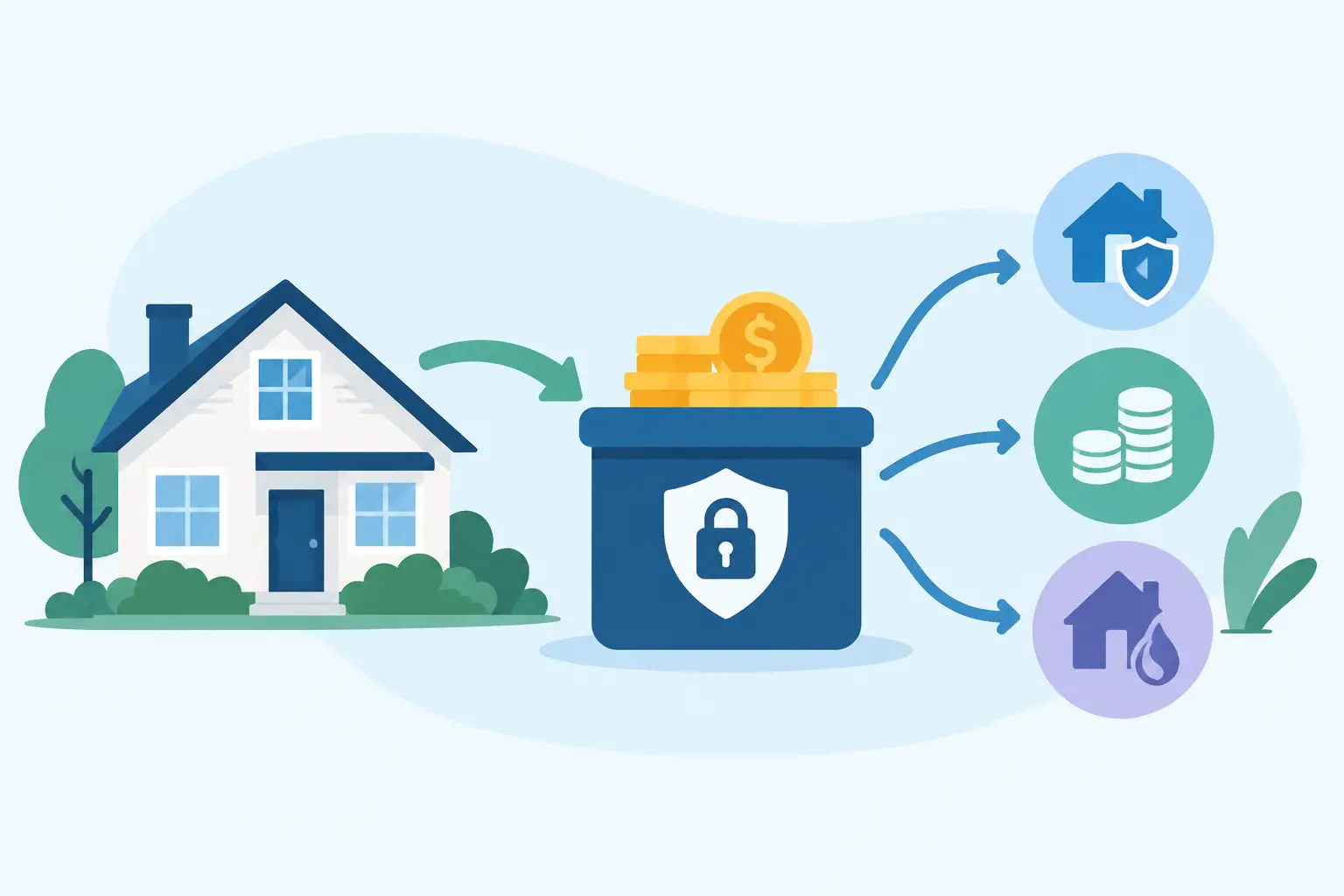
Learn how escrow accounts work for mortgages, what your monthly payment covers, and when your balance can change, with clear guidance for all homeowners.

Housing Affordability Trends for Homebuyers
A home can be within your purchase price range and still feel out of reach once the full monthly payment is on the table. That is the reality behind many housing affordability trends: buyers are balancing home prices with mortgage rates, insurance, taxes, and everyday household costs at the same time. The right question is no longer simply, “What price home can I buy?” It is, “What payment can I carry comfortably while still protecting the rest of my financial life?”
For buyers and homeowners, affordability is personal. Two households with the same income may arrive at very different answers based on debt, savings, location, credit, loan program, and long-term plans. Understanding the forces at work can make the next step feel more manageable and help you make decisions with confidence rather than urgency.
What Housing Affordability Trends Really Measure
Housing affordability is often discussed as if it were one number. In practice, it is a relationship between household income and the total cost of owning a home. When prices rise faster than wages, affordability tightens. When mortgage rates rise, the payment attached to the same loan amount increases. When property taxes, homeowners insurance, or association dues climb, buyers may need to adjust their target price even if the home itself has not changed.
The monthly mortgage payment is usually the largest piece, but it is not the only one. A complete estimate should account for principal, interest, property taxes, homeowners insurance, and mortgage insurance when applicable. Depending on the property, it may also include homeowners association dues, flood insurance, maintenance, and utilities.
This is why a preapproval based solely on a maximum loan amount can be incomplete. A thoughtful conversation about affordability includes your goals, your preferred payment range, and the cash you want to retain after closing. Maximum approval is not always the same as a comfortable budget.
Why Rates Still Change the Conversation
Mortgage rates do not have to move dramatically to affect buying power. A rate change can alter the principal-and-interest payment enough to change which homes fit a buyer’s budget. In a competitive market, that difference may influence the neighborhoods, home sizes, or property conditions a buyer considers.
That does not mean every buyer should wait for a particular rate. Timing the market is difficult, and the best decision depends on your readiness to buy, local inventory, job stability, savings, and how long you expect to own the home. A lower rate later may help, but a higher purchase price or continued rent payments can offset some of that benefit.
It is also useful to remember that a mortgage rate is not the same as a home’s total cost. Buyers who focus only on the rate can overlook a tax assessment, insurance premium, or needed repairs that put meaningful pressure on the monthly budget. Comparing complete payment scenarios is more valuable than comparing rate headlines alone.
The refinance factor
For some buyers, a fixed-rate mortgage provides certainty even if rates are higher than they would prefer. If market conditions improve in the future and the homeowner qualifies, refinancing may be an option. It should not be treated as a guarantee, since future rates, home value, credit, income, and closing costs all matter. Still, it can be part of a long-term planning conversation.
Inventory Can Matter as Much as Price
Affordability trends are shaped by supply as well as financing. In markets with limited homes for sale, buyers may encounter multiple offers, waived contingencies, or prices above list price. Those conditions can make affordability feel worse because buyers are not only evaluating the asking price, but also the potential cost of winning the home.
More inventory can give buyers room to compare properties, negotiate repairs, or ask for seller concessions. Yet greater selection does not automatically mean lower prices. Local job growth, school districts, commuting patterns, new construction, and available land all influence the market differently.
For buyers in Pennsylvania and across the markets Red Tree Mortgage serves, affordability can vary significantly from one county or neighborhood to the next. Looking slightly beyond a first-choice area, considering a different property type, or being open to a home that needs modest updates may create options. The trade-off is real: a lower price may mean a longer commute, fewer amenities, or future renovation work. The goal is not to compromise blindly, but to decide which trade-offs support your life and financial priorities.
Income Growth Helps, but Household Costs Still Matter
Rising wages can improve affordability, especially for households whose income has increased since they began saving for a home. But income growth does not operate in isolation. Auto loans, student loans, credit card balances, child care, and other regular expenses affect the debt-to-income ratio lenders review and the payment a household can comfortably manage.
Before shopping, take an honest look at the full monthly picture. That includes costs that will continue after closing, along with expenses that may change after a move. A longer commute, higher utility bills, maintenance needs, or a larger home can all affect the real cost of ownership.
This is also where avoiding a rushed down payment decision matters. Using every available dollar for the down payment may reduce the loan amount, but it can leave little room for closing costs, moving expenses, repairs, or an emergency. In many cases, a slightly smaller down payment combined with appropriate financing and retained reserves may be the healthier choice.
Loan Choices Can Improve Affordability
There is no single “best” mortgage for every buyer. Loan programs can change the upfront cash needed, monthly payment structure, mortgage insurance requirements, and qualification path. A first-time buyer with steady income and limited savings may benefit from a low down payment option. A qualified veteran or eligible service member may find that a VA loan offers meaningful advantages. Buyers purchasing in eligible rural areas may want to examine USDA financing.
FHA loans can be useful for borrowers who need more flexible credit or down payment options, while conventional loans may offer advantages for buyers with stronger credit, larger down payments, or plans to remove private mortgage insurance later. For a higher-priced property, jumbo financing may be relevant. Each choice has costs and benefits, so the program should fit the borrower, not just the property.
Seller concessions can also help in the right transaction. Depending on the loan type and contract terms, a seller may contribute toward certain closing costs or a temporary rate buydown. A buydown can lower the payment for an initial period, which may be helpful during a transition. It is not always the best use of a seller credit, however. Some buyers may prefer applying available funds to closing costs, a price reduction, or permanent rate options. Reviewing side-by-side scenarios makes the decision clearer.
How to Respond to Housing Affordability Trends
The most productive response is preparation, not panic. Start with a payment range that respects your current budget and future goals. Then have a loan professional run realistic scenarios using estimated taxes, insurance, and different down payment amounts. Ask what changes if the rate moves, if you choose a less expensive home, or if you receive seller assistance.
Keep your credit and cash position steady while preparing to buy. Avoid taking on new debt without discussing it first, continue building reserves, and keep documentation organized. If you are already a homeowner, review whether a refinance, cash-out refinance, or simply staying put makes sense based on your equity, rate, and goals. There is no benefit in forcing a transaction that does not improve your position.
A home purchase should support the life you want to build, not make every other financial decision harder. The market will continue to change, but a clear budget, a realistic loan strategy, and accessible guidance can help you recognize the right opportunity when it arrives.

Related Posts